★ AMSTRAD CPC ★ GAMESLIST ★ KNIGHT TYME (c) MASTERTRONIC ★

TILT
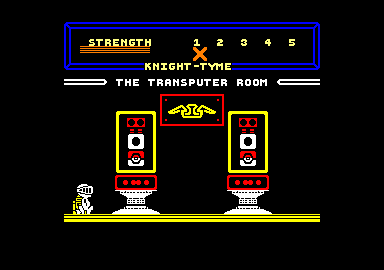
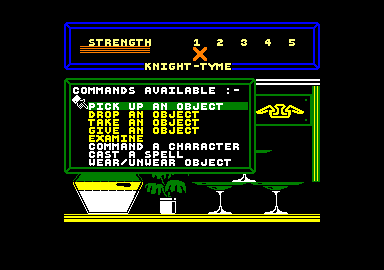
A la recherche du temps perdu KÀ la suite d'un événement peu commun Gimbal, le magicien, se retrouve catapulté au xxv siècle. Malheureusement pour lui, ses pouvoirs ne sont pas assez puissants pour qu'il puisse retrouver son époque. Sa seule chance est de trouver Klink, sorte de 'robot, qui possède le Datacube. Ce cube est une espèce de condensé de savoir, qui permet de trouver le chemin qui mène aux gardiens du Temps. Ces derniers en connaissent tous les secrets, et leur machine permet (peut-être) à Gimbal de retrouver son époque. Jeu d'aventure de qualité, Knight tyme se distingue surtout par son système dit « windimation ». Ce terme est la réunion de « window » et de « animation », cette technique « révolutionnaire» permet d'avoir accès à toutes les commandes grâce à des fenêtres qui s'ouvrent au milieu de l'écran: il suffit de sélectionner un mot avec le joystick ou le clavier, l'action qui en découle est immédiatement effectuée. Par ce biais, on peut prendre ou examiner un objet, lire un texte, lancer un sort, demander de l'aide.
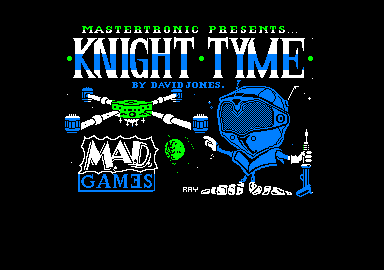
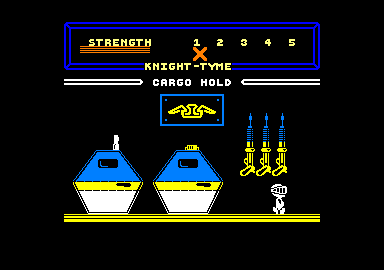
Ce système est très souple car il permet de s'affranchir de la barrière d'un analyseur syntaxique posant souvent des problèmes à ceux qui ne sont pas ou peu anglophiles, tout en restant plus compréhensible que le menu par icônes (où il faut faire toute une gymnastique intellectuelle pour interpréter, correctement le symbolisme). Ce système, offrant une réelle rapidité, se révèle assez agréable à l'usage. Le reste du jeu est au même niveau. Le graphisme est de très bonne facture, aussi bien en ce qui concerne les décors que Gimbal.

M.B. , TILT n°35 Oct 86

KNIGHT TYME
(c) MASTERTRONIC

Auteur: David JONES
Graphics: Ray OWEN

★ TRIVIAS:

  • David Jones' foray into writing games came by chance after meeting with video rental shop owner, Albert Owen, who was looking to set up a games company.
  • Are there any tips you can share now? Because after three decades, we are still struggling to finish it! I can't really offer any lips this long after the release of Spellbound, but there are YouTube videos of the solution. If I was going to play it again myself I'd find a good one of those and keep it handy. I think I'd be more likely to replay Knight Tyme though. I think it's the best of the trilogy.

David Jones (1987)
  • David followed up with his breakthrough hit Finders Keepers; his first game to feature Magic Knight. The character would go on to feature in three more games, Spellbound , Knight Tyme and Stormbringer, and became a cult figure, tying together the platform and adventure genres to give the player a unique experience.
  • But without Albert Owen, the father of Ray Owen who created the graphics in all the Magic Knight games, I probably wouldn't have written anything publishable. He was enthusiastic and supportive and obtained the device I used to download from the TRS-80 model III (my second computer) to the Spectrum.
  • Knight Tyme was the pinnacle of the technical content of those games. I initially wrote it as one of the few original games for the newly released 128k Spectrum , but I always knew I'd want to cram as much of it as I could into the 48k version. I did what I could and added data compression and other systems to help with that. Stormbringer was a bit of a drag to write.
  • John Maxwell, who was my main contact person at Mastertronic. had moved on and I didn't feel I had a good working relationship with the new person. This meant that I couldn't visit the office in the same way to get an enthusiasm burst like I was used to. I had no appetite for working further with Mastertronic after this even though I had other games sketched out.
  • Another project I'm working is The Magic Knight Game Book -1 wrote the first version of the around 1988. It's a fighting fantasy-styte adventure book that now only exists on faded print out. I am reading this to my computer and I will be editing it as a collaboration between a young me and current me. Also there's my board game, currently called Path of the Mage, which is a hex the-based game that l'm prototyping at the moment.
  • David Jones - Under the spell (Interview by Popular Computing Weekly)

★ ANNÉE: 1986
★ LANGAGE:
★ GENRE: INGAME MODE 1 , ARCADE , PLATES-FORMES , MEDIAEVAL , TAPE
★ LiCENCE: COMMERCIALE
★ COLLECTION: MASTERTRONIC ADDED DIMENSION


★ AMSTRAD CPC ★ DOWNLOAD ★

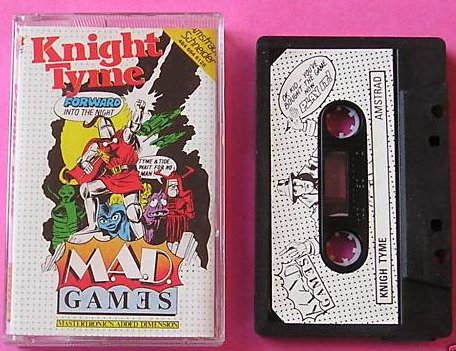
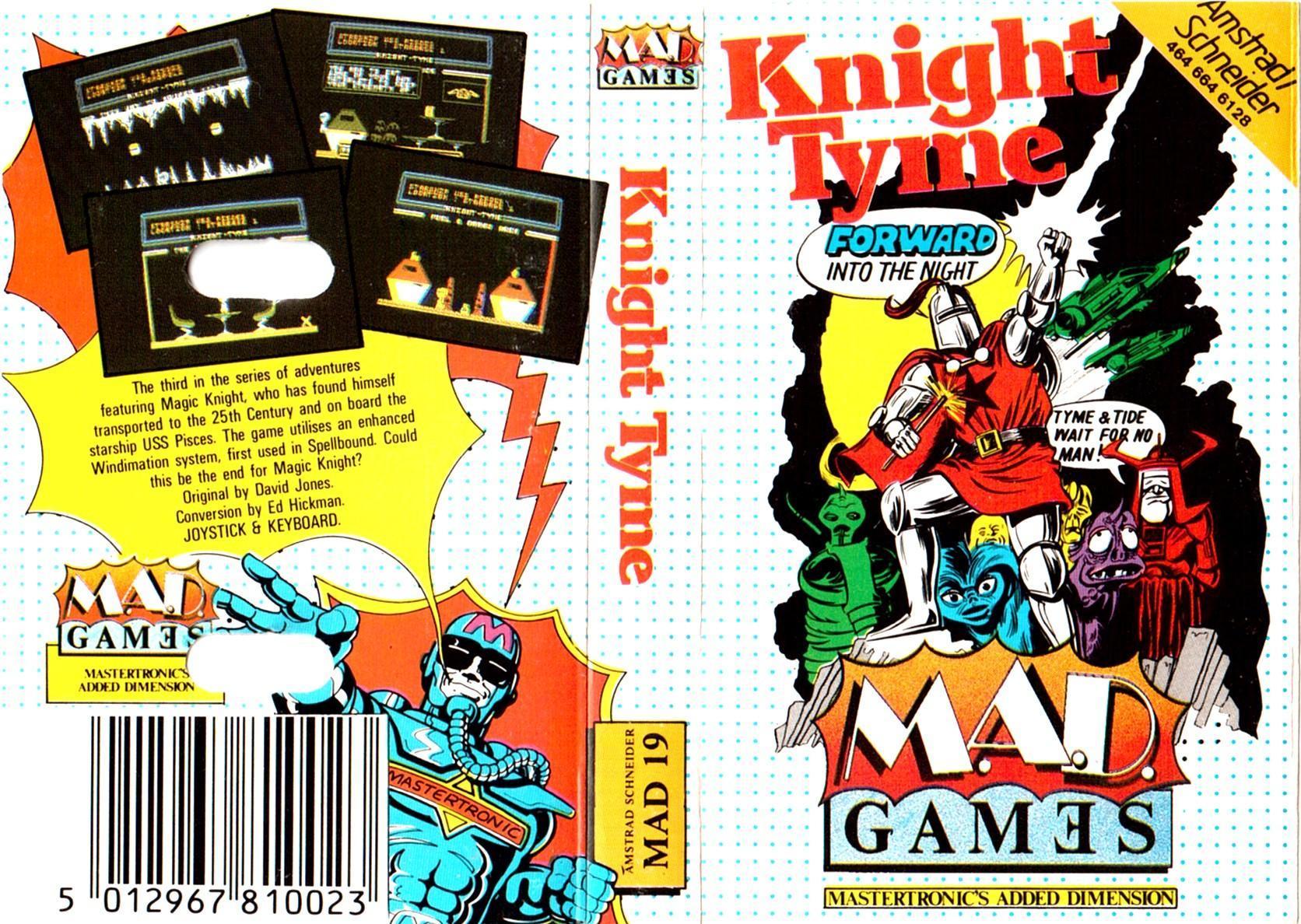
Cover/Package:
» Knight  Tyme    (Release  TAPE-MAD)    ENGLISHDATE: 2019-02-10
DL: 365
TYPE: image
SiZE: 372Ko
NOTE: Scan by hERMOL ; w1677*h1190

Dump disk:
» Knight  TymeDATE: 2010-12-10
DL: 437
TYPE: ZIP
SiZE: 31Ko
NOTE: Extended DSK/42 Cyls
.HFE: Χ

Dump cassette (version commerciale):
» Knight  Tyme    ENGLISHDATE: 2018-06-10
DL: 448
TYPE: ZIP
SiZE: 31Ko
NOTE: Dumped by DLFRSILVER for Loic DANEELS ; CSW2CDT-20170630
.LOG: √
+

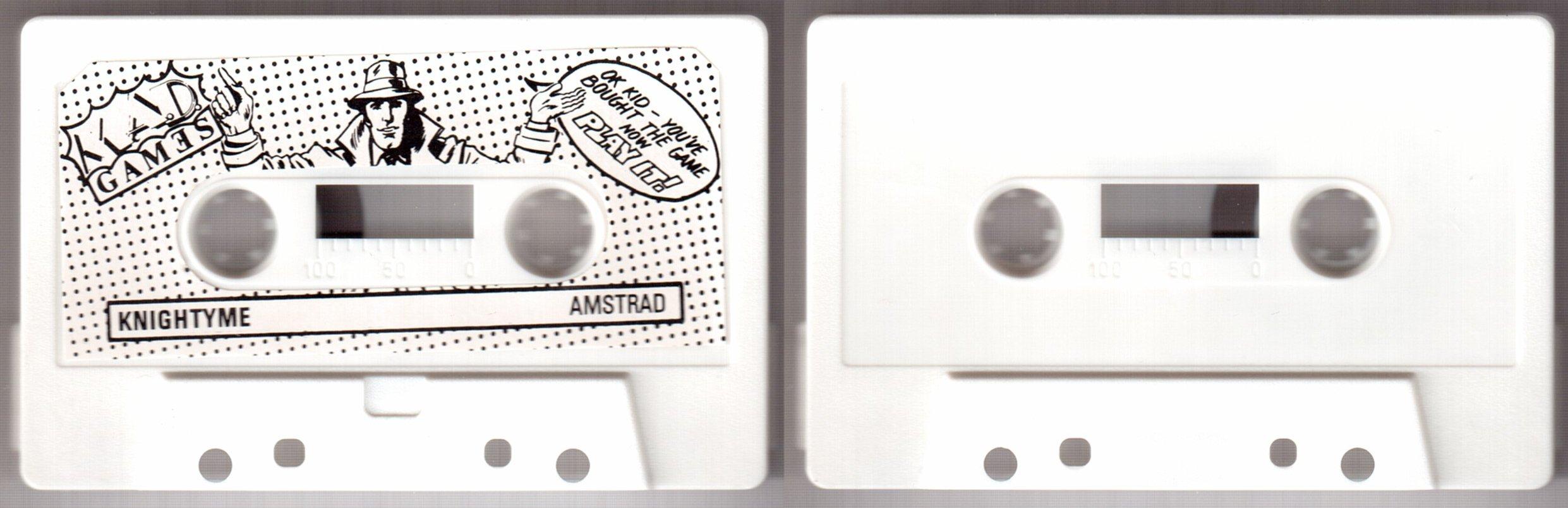
Medias/Supports:
» Knight  Tyme    (Release  TAPE)    ENGLISHDATE: 2019-02-09
DL: 300
TYPE: image
SiZE: 193Ko
NOTE: Scan by hERMOL ; w1246*h1577

» Knight  Tyme    (Release  TAPE-MAD)    FRENCH-SPANISH-ITALIAN-DUTCHDATE: 2019-02-09
DL: 191
TYPE: image
SiZE: 141Ko
NOTE: Scan by hERMOL ; w1211*h1535

Notices d'utilisation:
» Knight  Tyme    (Release  TAPE-MAD)    ENGLISH-FRENCH-SPANISH-ITALIAN-DUTCHDATE: 2022-09-02
DL: 322
TYPE: PDF
SiZE: 3685Ko
NOTE: Scan by Pinace ; 2 pages/PDFlib v1.6

» Knight  Tyme    (Release  TAPE-MAD)    ENGLISHDATE: 2019-02-12
DL: 332
TYPE: PDF
SiZE: 719Ko
NOTE: Scan by hERMOL ; 2 pages/PDFlib v1.6

Sur le forum:
» Topic: Cheats, pokes ou solution...
Je participe au site:
» Vous avez des infos personnel, des fichiers que nous ne possédons pas concernent ce jeu ?
» Vous avez remarqué une erreur dans ce texte ?
» Aidez-nous à améliorer cette page : en nous contactant via le forum ou par email.

CPCrulez[Content Management System] v8.732-desktop/c
Page créée en 100 millisecondes et consultée 2973 fois

L'Amstrad CPC est une machine 8 bits à base d'un Z80 à 4MHz. Le premier de la gamme fut le CPC 464 en 1984, équipé d'un lecteur de cassettes intégré il se plaçait en concurrent  du Commodore C64 beaucoup plus compliqué à utiliser et plus cher. Ce fut un réel succès et sorti cette même années le CPC 664 équipé d'un lecteur de disquettes trois pouces intégré. Sa vie fut de courte durée puisqu'en 1985 il fut remplacé par le CPC 6128 qui était plus compact, plus soigné et surtout qui avait 128Ko de RAM au lieu de 64Ko.