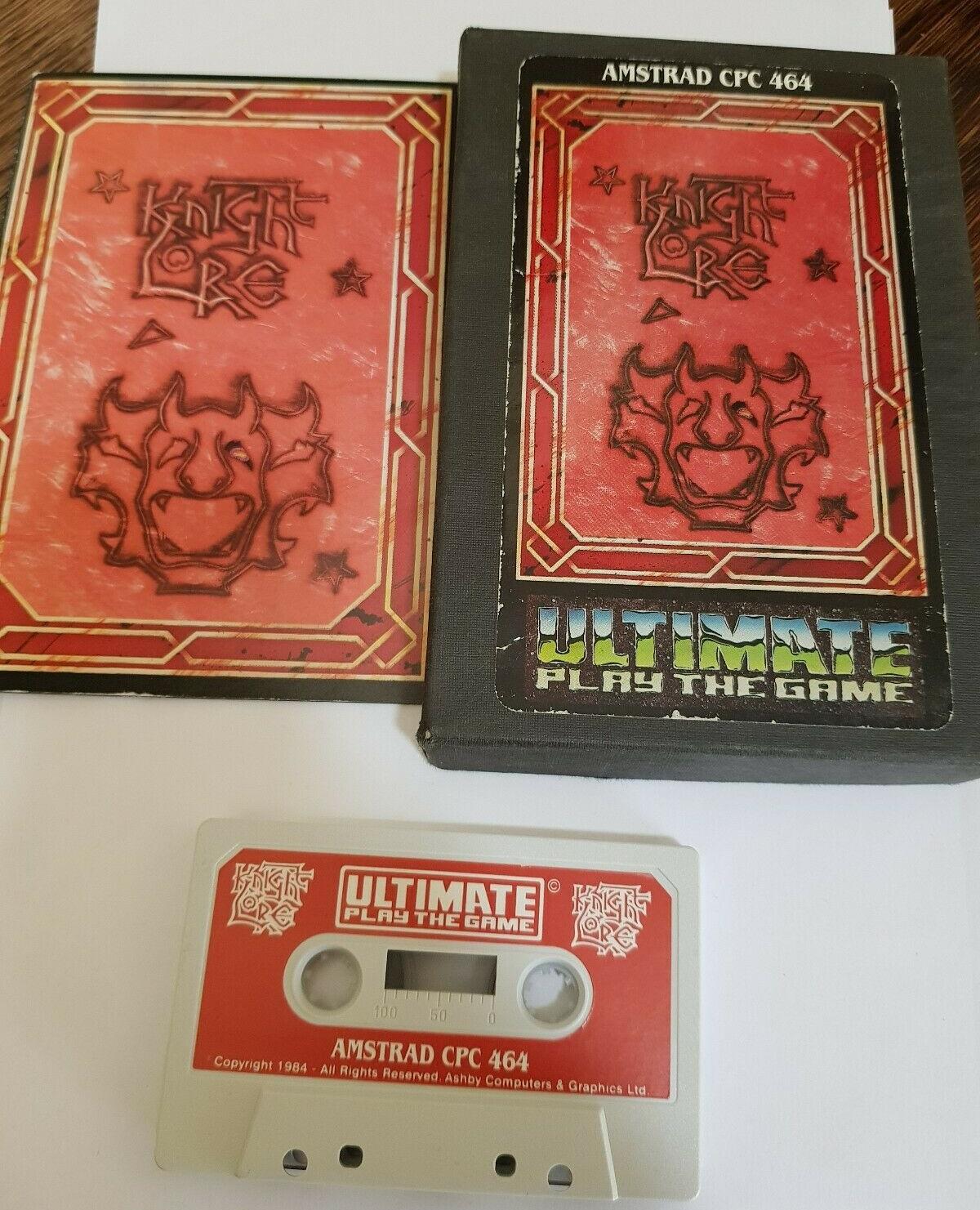
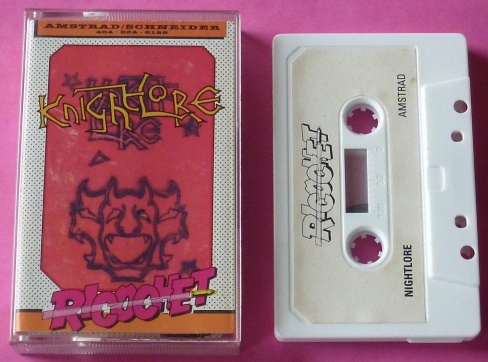
| ★ AMSTRAD CPC ★ GAMESLIST ★ KNIGHT LORE (c) ULTIMATE PLAY THE GAME ★ |
| CPCRULEZ | AMTIX |
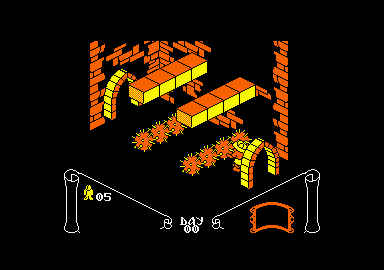
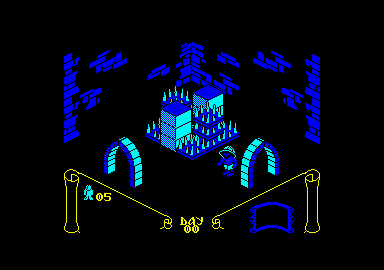
Recently you have been afflicted by a strange disease which, when the full moon appears, has the effect of turning you into a werewolf, half-man, half-wolf. Deep inside the strange castle is the wizard. Melkhior. within forty days and forty nights you must seek his help to rid you. Sabreman. of the fateful curse lest you are to remain a wolf tor ever. In the centre of the 128 room castle is the room inhabited by the ageing wizard and his cauldron. Should you enter the room as a human then a spell will rise from the cauldron and flash which object you should collect to put into the cauldron A total of fourteen objects (scattered at various places throughout the castle) must be placed in the cauldron and only then will you be healed.
The graphics in Knight Lore are incredible, some of the best to be seen on any micro. On the Spectrum, this game broke new barriers in programming, happily the Amstrad version has improved on the original by using a two colour scheme for the breath taking 3D rooms. It can take quite a while before you've mastered the knack of negotiating the hazardous obstacles, spikes and malevolent spoils can quite easily dispense with Sabreman and his wolfish alter ego, and even then you've still got the time limit with which to contend. Knight Lore uses a revolutionary technique called Filmation, which allows the character you control to interact with objects by pushing them around. This means that you can do a lot of things, for instance, if there is a ledge that's just a bit too high to jump onto then you can move an obiect and jump on that to gain extra hoight. Knight Lore is one of the best arcade/adventures for the Amstrad and is definitely worth getting hold of; the only problem is that movement tends to slow down quite a bit when there is more than one moving object on screen. Overall AMTIX! rating: 91% |
|  |
Page créée en 127 millisecondes et consultée 8876 fois L'Amstrad CPC est une machine 8 bits à base d'un Z80 à 4MHz. Le premier de la gamme fut le CPC 464 en 1984, équipé d'un lecteur de cassettes intégré il se plaçait en concurrent du Commodore C64 beaucoup plus compliqué à utiliser et plus cher. Ce fut un réel succès et sorti cette même années le CPC 664 équipé d'un lecteur de disquettes trois pouces intégré. Sa vie fut de courte durée puisqu'en 1985 il fut remplacé par le CPC 6128 qui était plus compact, plus soigné et surtout qui avait 128Ko de RAM au lieu de 64Ko. |