★ AMSTRAD CPC ★ PEOPLES ★ SOFTOGRAPHIE ★ COMPANY ★ SPLASH ★ |
| Games - Company | Splash |
Australia's software industry has seen numerous development teams come and go. The latest software house to launch forward is a Perth based operation. Andrew Farrell interviewed the man behind the name. At first the game didn't grab me. Another strategy program that sounded like a remake of a public domain downer. Then I met the guy behind the concept, Alex Aguero, and sat down and played the program. I love it. Bouncing into the office, in traditional Perth Entrepreneurial style, Alex and I took a seat on the balcony to discuss developments.
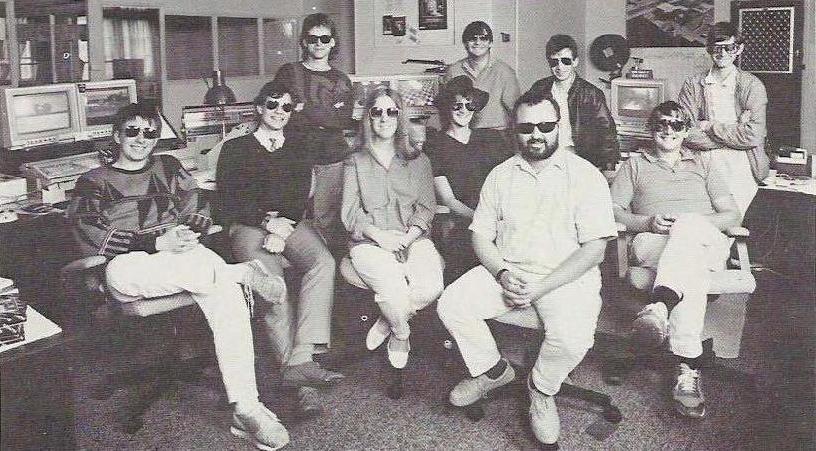
To start with, this operation has had a good sized injection of cash. The way Alex saw things, if the setup was worth setting up, it had to be done properly. The photo says it all. What you can't see are the hidden megabytes of RAM, hard disk drives and metres of cabling that make all the computers work together. Every programmer's dream. Transputers are on the way. Aralia, now called Splash, started with bigger projects than the likes of Flippit. In case you missed the review (ACR January issue), Flippit was the first program to roll off the Splash production line. More are promised. But these are only the start, the cash flow, to get the bigger projects off the ground. Alex has the energy and enthusiasm to make it happen. Couple his business head with the guys he's assembled and we can expect big things in the near future. All involved are dedicated, loyal hackers and designers. Some are out of university, others dropped out of high-paying jobs, a few walked in off the street. All share the drive and determination to work together and make it live. They sleep, eat and breath computers. An interesting side to this story is the number of Atari fanatics amongst the team that have become Amiga converts. There's a few C64ers in there as well, ready to cram into 64K whatever idea hits the drawing board. Talking nothing but binary, thinking in Assembler, dreaming in C. Alex demonstrated game designer programs, graphics and routines that are to be part of future creations. It all looked very impressive. I wish them every success. Australia has got the talent. At last someone is making a go of putting it to work. How can we all help? By buying a Flippit, of course!
|