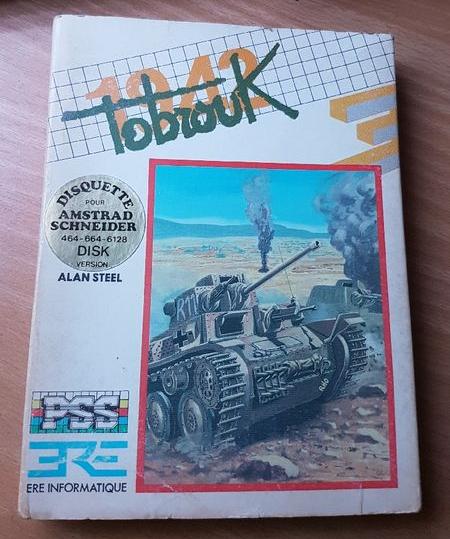
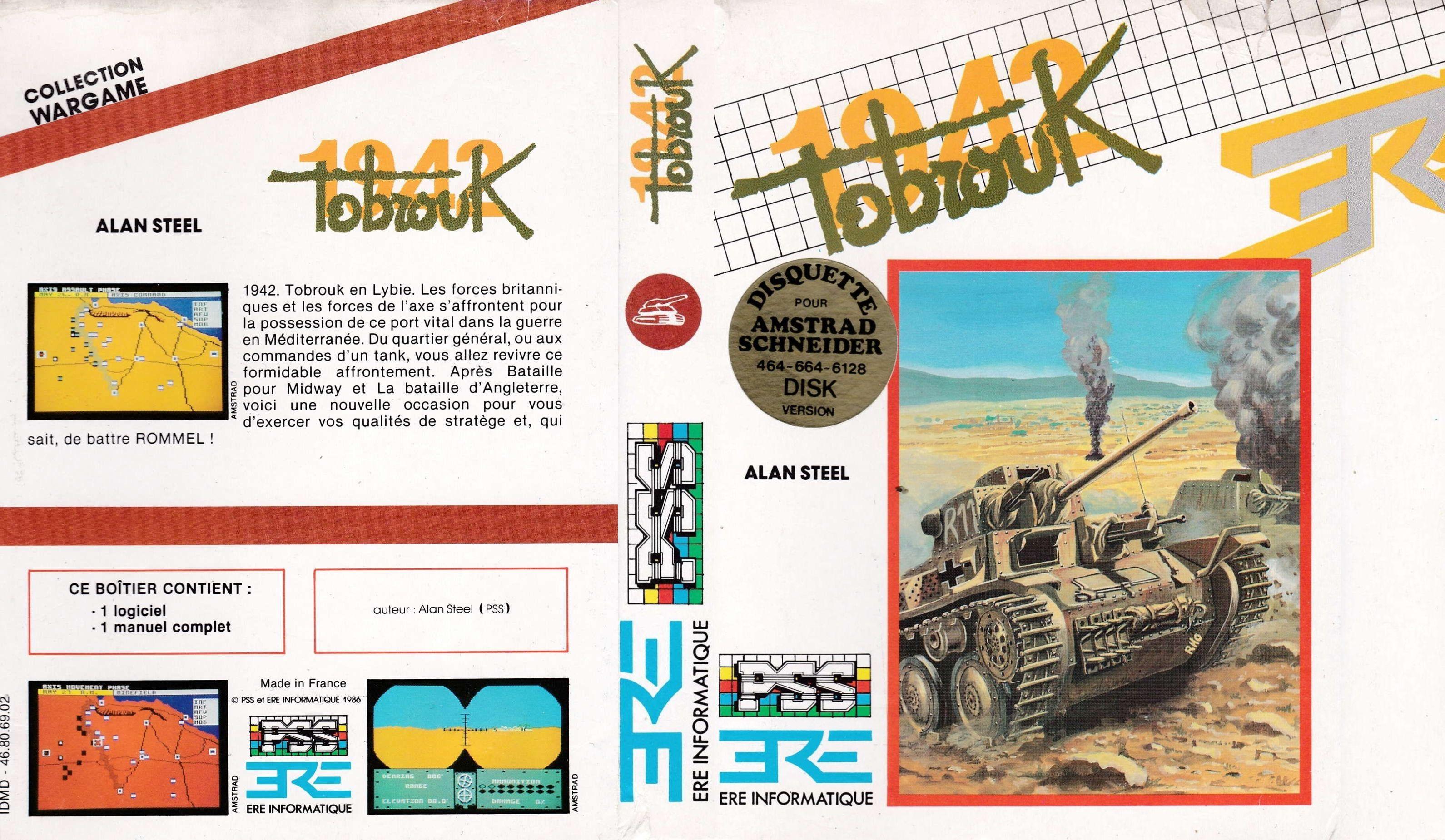
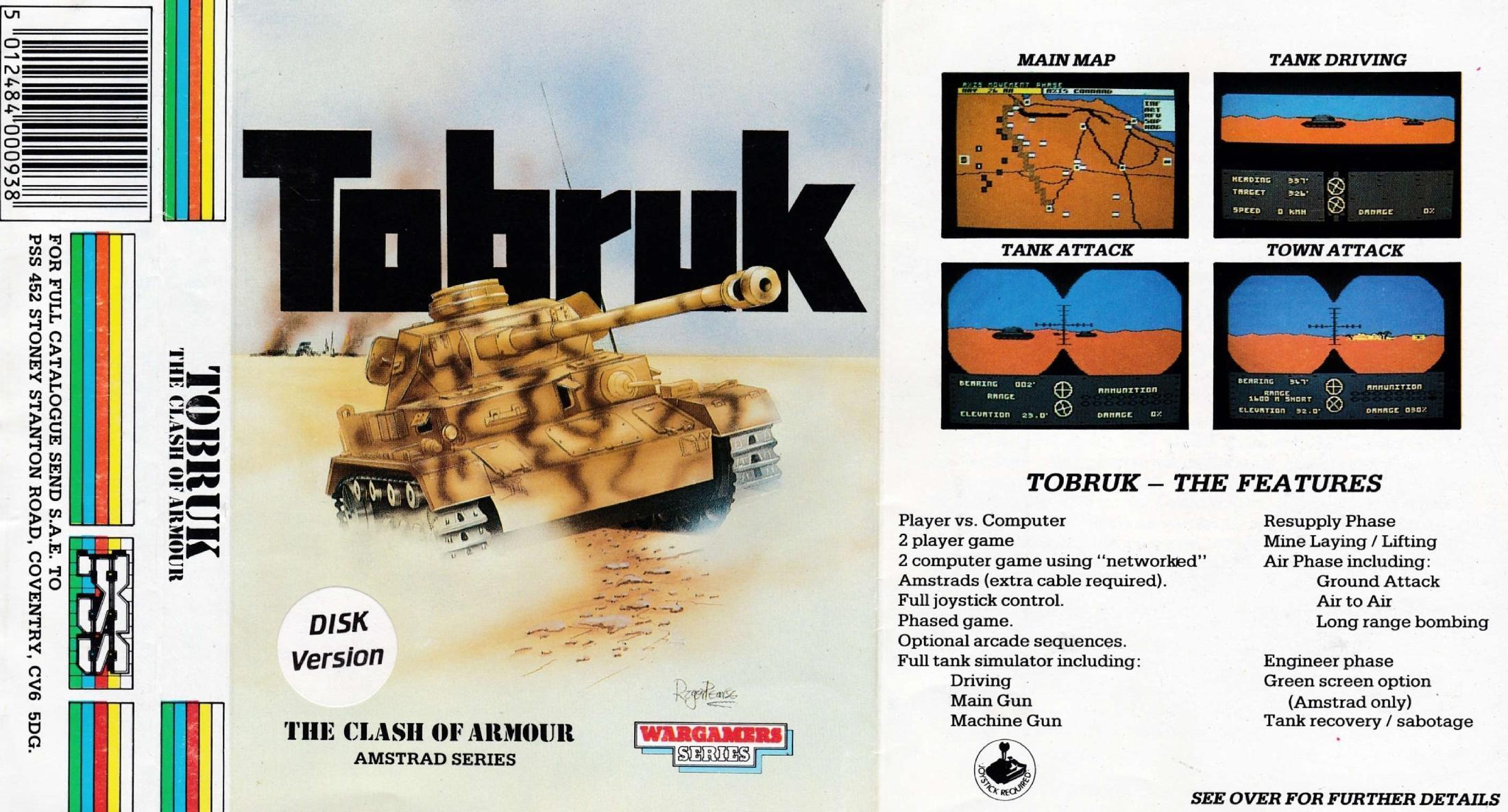
The masters of Amstrad wargaming are on the offensive again, this time with a recreation of the battle in North Africa in 1942. It takes the same form as their previous wargames in that it includes optional arcade sequences for those that prefer them to straightforward strategy. The map on which the battle takes place is only one screen in size and shows the axis and allied units, allied occupied cities, minefields and terrain . In a one player game you control the axis forces, while in a two player game each player controls one of the sides. Incidentally, the program can be run using two Amstrads linked via the joystick ports using a special cable which PSS can supply - this means you can't see what your opponent is up to! 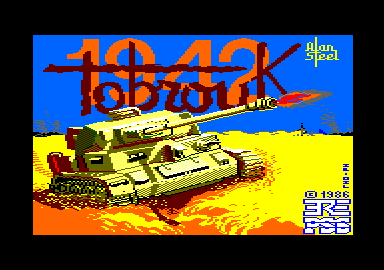 
Each day of the conflict is split into two so that units can move and attack twice during the 24 hours. After that they can be resupplied and extra commands given. Each unit has ratings for infantry, artillery, armoured fighting vehicles, supply and mobility. These show its fighting power and distance it can travel. Units can be resupplied with infantry, AFV's and supply when they are within supply lines but these usually aren't given in abundance.
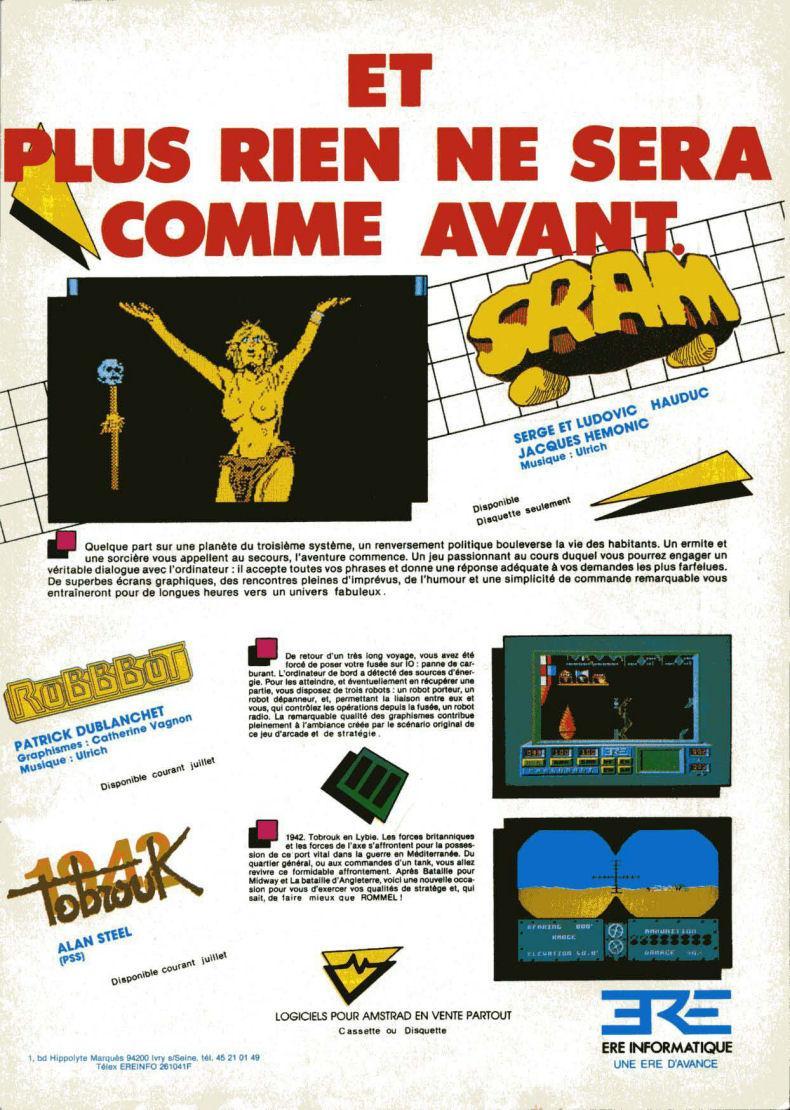
A unit can attack any adjacent enemy unit and once it does you can choose to take part in the arcade screen. The arcade sequence consists of driving a tank to destroy enemy machine guns, tanks and oases bases. You control the turret gun, machine gun and driving but also come under attack from the enemy forces. Your performance determines how well all the battles go. This is very much in the mould of PSS's previous wargames and has similar attraction. The combination of strategy and arcade sequences works well, but leaves it short on depth for true strategists. The presentation is up to their high standards and the graphics and sound also round the game off nicely. You may find it a little too similar to their previous war games but with the new setting and good arcade sequence it's still good value. BW, AA
|