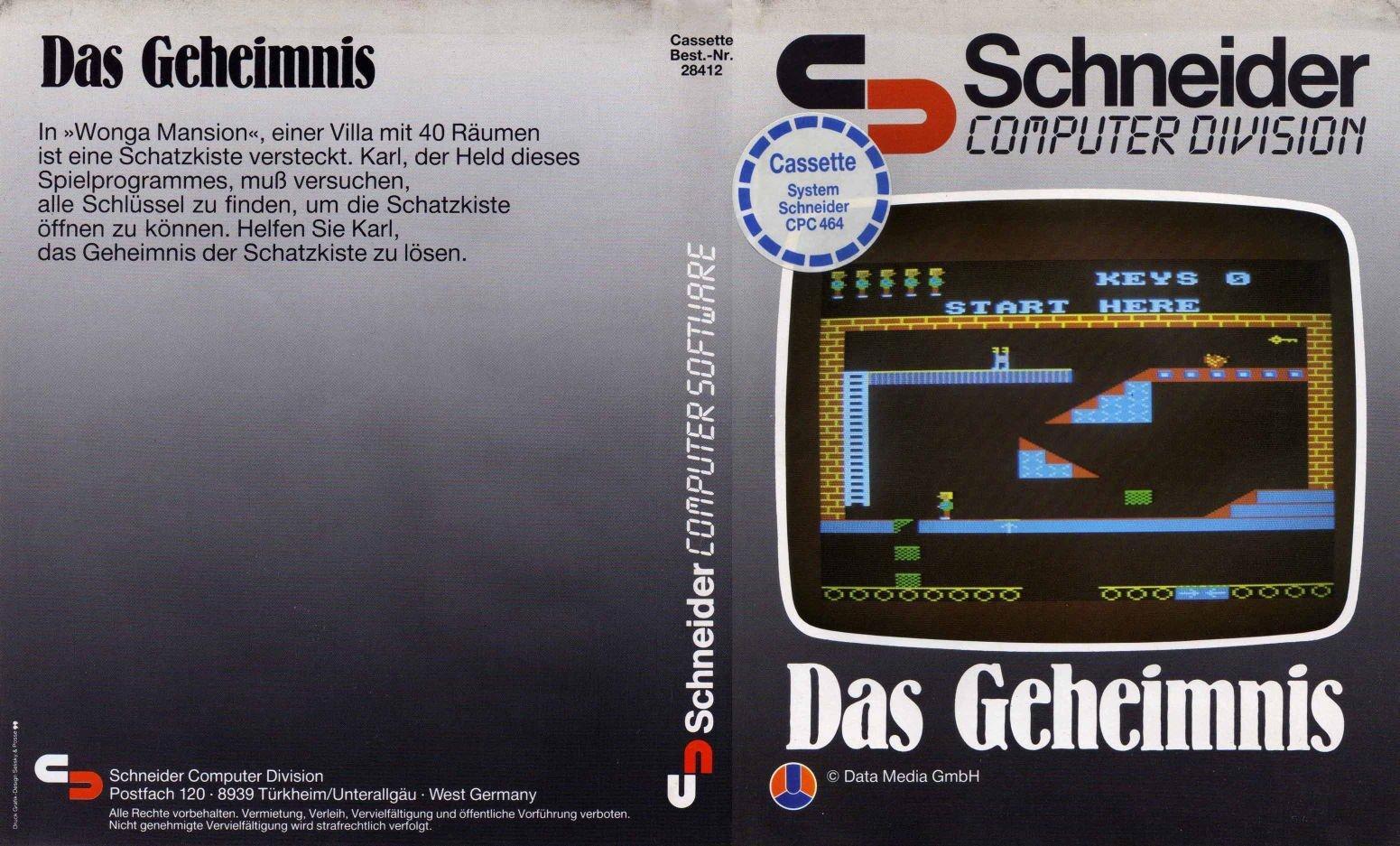
It has to be said, there is some doubt about this actually being public domain. If anyone can remember that far back, it was released by Software Projects in the early days of the CPC. Whether Software Projects have given this game permission to be PD isn't known. Are Software Projects still around? Do they care? The idea of the game is simple. You are Karl, a man with a mission. There's treasure to be found and Karl doesn't mess around when riches are involved. You must make your way through forty screens and collect a key from each one. When you have every key you can make your way to the exit, open the treasure and live the rest of your life on a beach with scantily clad girls bowing to your every whim. The only major problem is, it's incredibly easy to play but very difficult to complete. Karl moves at an alarming speed and there are hundreds, nay millions of baddies, ranging from space invaders to Rubik's Cubes, out to stop you. Some rooms have the key positioned so that a child of three could get it no problem, but others are precariously balanced on the edge of a large drop with four or five nasties flying around it on floor that crumbles away when you step on it. There are all sorts of platforms and hazards for you to confront: the place is littered with everything from ladders and conveyor belts to dissolving steps and killer things. It's very difficult. Let's face it, if you don't like it, the young ‘uns will! AA  
|