★ AMSTRAD CPC ★ GAMESLIST ★ GHOULS (c) MICRO POWER ★

CPCRULEZBIGKHome Computing Weekly
★ Ce texte vous est présenté dans sa version originale ★ 
 ★ This text is presented to you in its original version ★ 
 ★ Este texto se presenta en su versión original ★ 
 ★ Dieser Text wird in seiner Originalfassung präsentiert ★ 

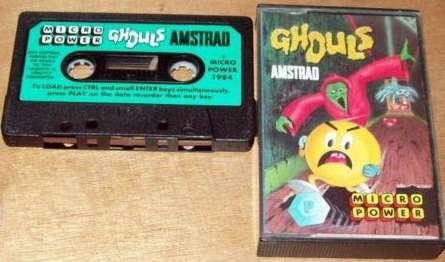
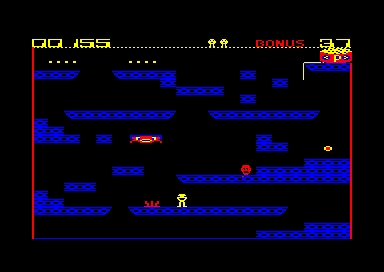
Software producers of all that is naff for Amstrad had better buck their ideas up if they want to compete with Micro Power's new offering. Do you hear me, Arm oft? The idea may not be new (it originally graced the Beeb's memory) and the graphics may not zap your socks off but — and this is a big but — it 'a one of the most addictive and compulsive games I have played for a long time.

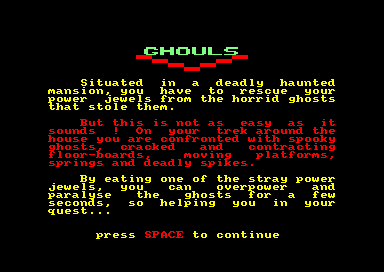
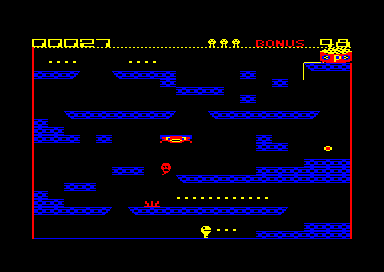
It all begins with you, looking a bit like Pac Man with legs, trying to recapture your power gems from the pilandering poltergeist at Creepy Mansion This involves getting to the pot of treasure via the now standard platforms seen in so much of today's software Hazards include poison smeared spikes, moving platforms and in the later sheets, bouncing spider Although there's only four sheets each one is tricky enough to keep you glued to your micro and monitor for months

All in all. it's a must for anyone's software collection especially since there's an awful lot of naffware about for Amstrad's little baby. It's a hit !

G.L., BIGK

GHOULS
(c) MICRO POWER

Developer: Micro Power
Concept: DJ. Hoskins

★ YEAR: 1985
★ LANGUAGE:
★ GENRE: INGAME MODE 1 , ARCADE , PLATES-FORMES , TAPE
★ LiCENCE: COMMERCIALE


★ AMSTRAD CPC ★ DOWNLOAD ★
Je participe au site:
» Vous avez des infos personnel, des fichiers que nous ne possédons pas concernent ce jeu ?
» Vous avez remarqué une erreur dans ce texte ?
» Aidez-nous à améliorer cette page : en nous contactant via le forum ou par email.

CPCrulez[Content Management System] v8.74-desktop
Page créée en 171 millisecondes et consultée 4365 fois

L'Amstrad CPC est une machine 8 bits à base d'un Z80 à 4MHz. Le premier de la gamme fut le CPC 464 en 1984, équipé d'un lecteur de cassettes intégré il se plaçait en concurrent  du Commodore C64 beaucoup plus compliqué à utiliser et plus cher. Ce fut un réel succès et sorti cette même années le CPC 664 équipé d'un lecteur de disquettes trois pouces intégré. Sa vie fut de courte durée puisqu'en 1985 il fut remplacé par le CPC 6128 qui était plus compact, plus soigné et surtout qui avait 128Ko de RAM au lieu de 64Ko.