| ★ HARDWARE ★ LECTEURS DE DISQUETTES ★ AMSTRAD DDI-1 ★ |
| Amstrad Drive (Micro7) | DDI-1 Amstrad (A100%) | Lecteur 3” DDI-1 Amstrad (Amstrad Magazine) | Amstrad DDI-1 Disc Drive (Popular Computing Weekly) | Disc drive for everyone (Home Computing Weekly) |
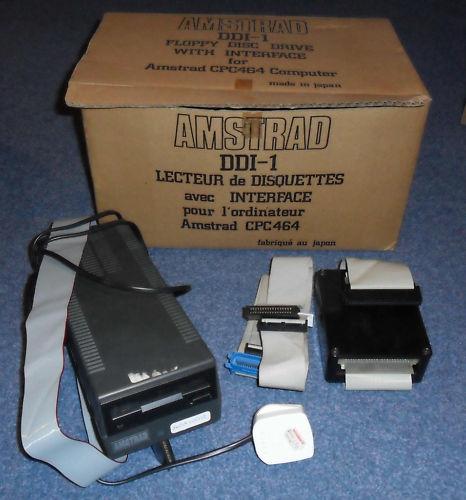
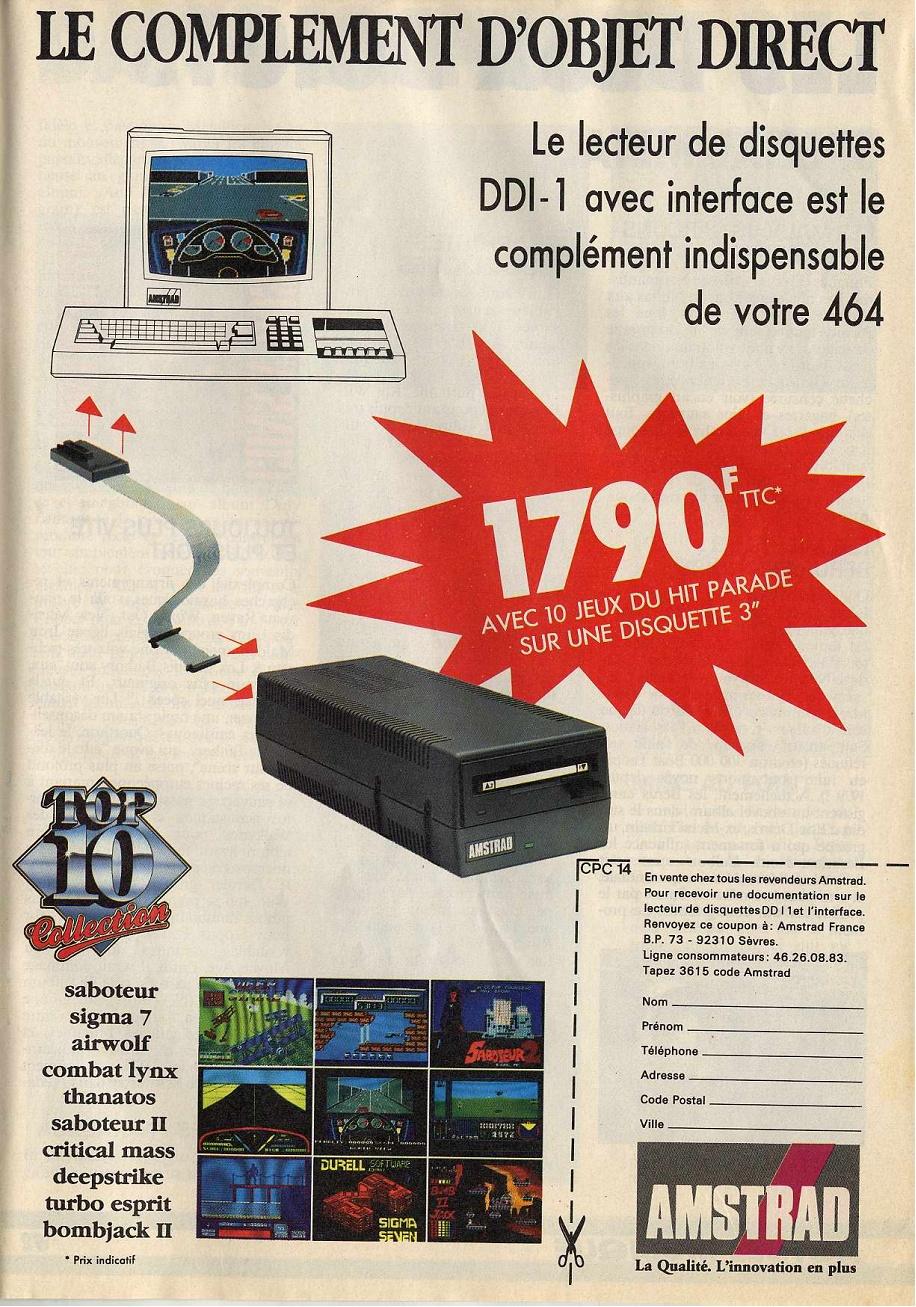
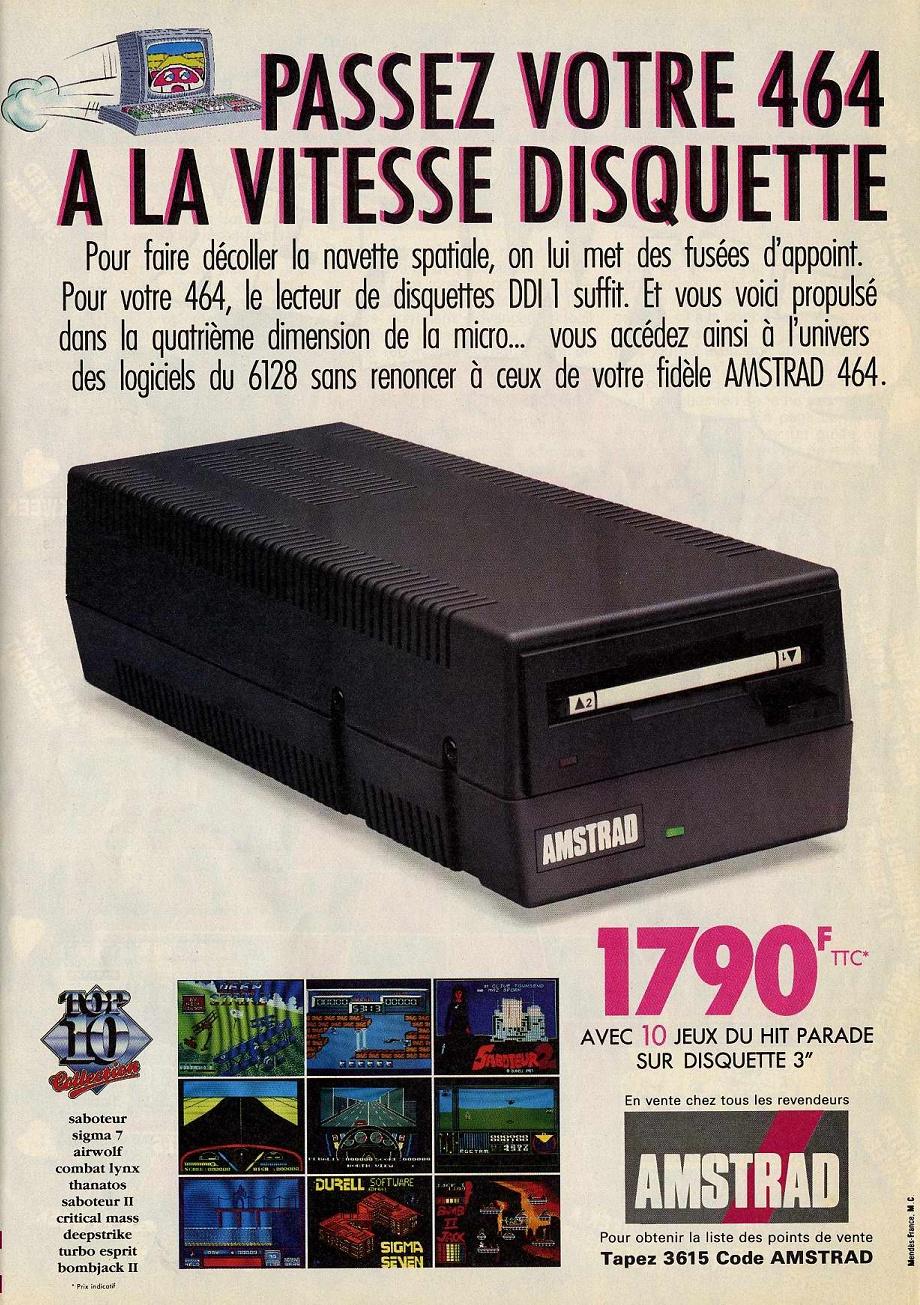
With the launch of its DDI-1 disc drive unit for the CPC 464 machine Amstrad is now offering the cheapest CP/M computer available; controversy may surround precisely how 'standard'the system is (it bears the Digital Research stamp, version 2.2), and some people may be overawed with the idea of such an operating system taking over their home computer. Fortunately, though, you can view CP/M as "icing on the cake". The disc system comes in two parts, drive and interface. The disc drive itself is housed in a box that also contains a mains power supply; it is rather long, but nevertheless compact. The drive itself is of the 3inch Hitachi/Panasonic format, using fully enclosed discs. In operation the drive is both fast and quiet, with a good solid response when loading and ejecting. Connection to the interface is achieved with a ribbon cable complete with a parallel connector for plugging in a second drive. Two disc units is the most that the system can handle. The interface plugs onto the exposed edge connector at the rear of the CPC 464. This arrangement is not particularly stable, (remember the ZX81 Ram pack wobble?), but gold-plated connectors are used. The interface itself contains a floppy disc controller chip (µPD765A) and a 16K 'sideways'Rom that occupies addresses &C000 to &FFFF. This puts it in competition with not only the screen Ram but also the Basic interpreter. The CPC 464 runs the ROM with the lowest number as the foreground program. Basic is Number 1, while the disc operating system ROM is 7, so when the firmware sets up the system it initialises the DOS but returns control to Basic. By cutting a wire link inside the interface it is possible to make the DOS's ROM become number 0, which means the computer will power up in CP/MN. But I am getting ahead of myself — the first thing people do with their new disc drive will not be to delve inside and start hacking away at the circuit-baud. How does the system work in normal use? It operates in two basic modes — Amsdos, the Amstrad disc operating system — and under CP/M. When you first attach the disc drive and interface there is no immediately obvious change; the computer powers up in Basic. However, I as soon as you use what would normally be a cassette command, it is the disc rather than the cassette that responds. Stream 9 has been re-routed and the firmware jump-blocks are overwritten during power-up. Amsdos, as this level of operation is called, also adds a number of extension commands to Basic, provided by the resident systems extensions (RSX) and therefore preceded by a bar symbol. It is possible to select the default drive, erase and rename files, and switch back to cassette operation, either for reading, writing, or both. Issuing the commands |TAPE.IN and |DISC.OUT, for example, will result in a Load operation fetching a program from tape and a Save putting it on to disc. To provide the RSX calls and give Amsdos work-space, some Ram needs to be borrowed from the computer; it appears that just over 1K is lost to Basic. The extra routines associated with the DOS are vectored through Ram jump-blocks, and these are documented in an appendix to the firmware manual. So far, very good The disc drive provides a storage method about 50 times faster than cassettes, and automatically makes back-up files when files are closed (it renames the old file with a Bak suffix and deletes any other back-up). Each side of a disc's 40 tracks holds 180K, of which the directory occupies 2K. With CP/M, however, 9K is lost to the system and there are two other formats possible. Vendor format leaves space for CP/M information, to avoid you selling the property of Digital Research (who employ some very good lawyers!). IBM format allows discs produced on an IBM PC with CP/M 86 and 3inch disc drive to be read by the CPC 464 and vice-versa. This last option gives 154K capacity. What delights await when the CPM command is used? Assuming a system disc is in place, some data is loaded, the screen changes colour and the screen notifies that we are in CP/M. A Dir command will show that the system disc provides not only the 'standard'utility programs, such as ED, MovCPM, Pip, Asm and Ddt (these last are an 8080 assembler and de-bugger respectively) but a number of Amstrad additional commands such as Cload and CSave (tape/disc transfer), Disc-copy, SetUp and Amsdos. There are two restrictions placed on any CP/M programs you might wish to run—other than the fact that they need to be on 3inch disc. As the CPC 464 firmware uses all of the Z80's restarts but RST 6, this is the only restat that is available to CP/M DDT, for example, normally uses RST 7: so the Amstrad version has to be patched to use 6. Other programs may also have to be patched to use Rst6. The other is the contentious matter of the size of the transient program area — how big a program can be run in Ram? Most CP/M systems allow about 56K for programs to use, but as 16K of the CPC 464's memory is used for screen display, il is not surprising that there is only 39.5K available to run programs in ROM. This is not as serious a drawback as it might seem — the whole point of CP/M is that portions of program and most of the data is held on disc and overlayed into Ram when required- Some programs will need to be altered, which, while not a layman's job, should not be a major task. I have seen such items as Microsoft Basic and Wordstar running on the Amstrad without patching, but these both cost more than the computer so who would want to run them anyway? If you want anything else, Amsoft will put you in touch with a company that can 'port' across any CP/M program at retail prices — Timatic Systems of Newgate Lane, Fareham, Hants. What must not be forgotten is that, even without CPM, the disc system for the Amstrad CPC 464 would still be a very worthwhile addition — add CP/M and you have much more than just icing on the cake. Jeff Naylor, PopularComputingWeekly841129 |