Easy to use Rom software on the Amstrad computers hasn't reached quite the same epidemic proportions as it has on the BBC. principally because you have to buy a board with sockets before you can even use them. Even so the number of available ROM programs has been slowly growing and it was inevitable the Eprom programming hardware would follow. As is the way with such things, several have begun to be advertised at the same time, but the Timatic board appears to be cheaper than all but one and included in the price are three spare ROM sockets, freeing you from the need to buy a separate utility to use the resulting chips. The driving software for Timatic's Eprom board also has more relevance than most to the home user - although it will allow you to duplicate purpose written Roms for commercial sale, it also provides some marvellously easy to use software options. You can put your own Basic or machine code programs onto Rom, as long as they take up less than 16k. The Roms that use this option copy the software back into Ram so that although they are accessible instantly they do not free more memory room for data.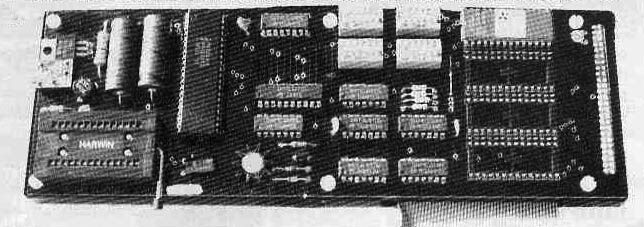 On the other hand the programs are then editable and you don't have to worry about learning all the ins and outs of Rom/Ram switching. 8k and 16k Roms can be used. The board is an extraordinarily well constructed piece of hardware. It is enclosed in a solid metal case and connects to the CPC by a ribbon connector, allowing it to fit any model of machine. The connector has a through bus for other hardware. The four ROM sockets, one containing the menu driven XRom software, each have switch selectable ROM numbers, real switches rather than little plastic links. The Eprom to be programmed is set into a separate Zero Insertion Force socket. You are provided with a very reliable looking (ie, nothing like a Sinclair power pack) 9 volt power supply that only needs to be connected if you are programming the Roms, not if you are just reading them. There are one or two minor criticisms; the documentation is short on explanation in some areas, and, although you have the option to set the ROM size in blocks of 256 bytes, which can save time if you are Roming a short program, it would be nice if you also had the option for selecting between a full 8 or 16k chip. On the whole, though, it is a quality product that has proved to be a surprisingly useful and useable peripheral particularly with its ability to ROM your own Basic programs. Tony Kendle , PopularComputingWeekly860327
|