★ HARDWARE ★ VIDEO DIGITALISEUR ★ Video Digitizer ★ |
| Video Digitizer (John Morrison) | Eprom Expansion Board (John Morrison) | Interface Rom - Eprom Programmer - John Morrison |
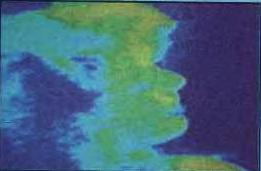
Pixel perfect pics PATRICIA SAVAGE ON THE BLACK BOXES LINKING YOUR HOME MICRO TO THE OUTPUT OF YOUR VIDEO SYSTEM After the home computer, the biggest market for consumer electronics in the last few years has probably been the video recorder. The UK has the biggest percentage of households owning video recorders in Europe, and market penetration is particularly high among home computer owners. Inevitably, the idea of linking the computer and the video machine has developed into an interesting market. Practically any micro can now be used to capture video signals from a recorder or a video camera, and manipulate them by adding artificial colours or incorporating them into other programs. The applications for illustrating games, desktop publishing, data analysis and other fields are obvious. The latest video digitiser product is for the Amstrad CPC series. Produced by John Morrison, best known in the Dragon computer market, it's a reasonably priced device with a decent specification. Like all similar products, the Morrison digitiser works by converting the signal intensity levels of the video image into a form the computer can understand, and present as a screen image. The final quality, of course, depends very much on the resolution of the computer. The Morrison digitiser can sample a picture in 1 /50th of a second. This means that moving images can be frozen efficiently. The alternative for slower digitisers is to use the pause function on the videotape, which often results in wobble or snow. Because the Morrison digitiser has a high scan rate, it presents a small continuous "monitor" image of around 2x2”. When you have found the image you want to digitise, it takes around 1 ½ seconds to capture the picture and present it as a full-sized image. Resolution is 65,536 pixels, operating in mode two. The results, which can be stored on tape or disc, can be hard copied to a suitable printer, giving a “newsprint” effect where pixels are either set on or off; there are no gradations of tone. The digitiser stores the pictures in 64 K of onboard memory, and comes complete with software on tape or disc and a video connector lead. PCW
|