★ GAMES ★ EDITEURS ★ COKTEL VISION ★ |
| Coktel Vision | Games - Company | Coktel Vision |
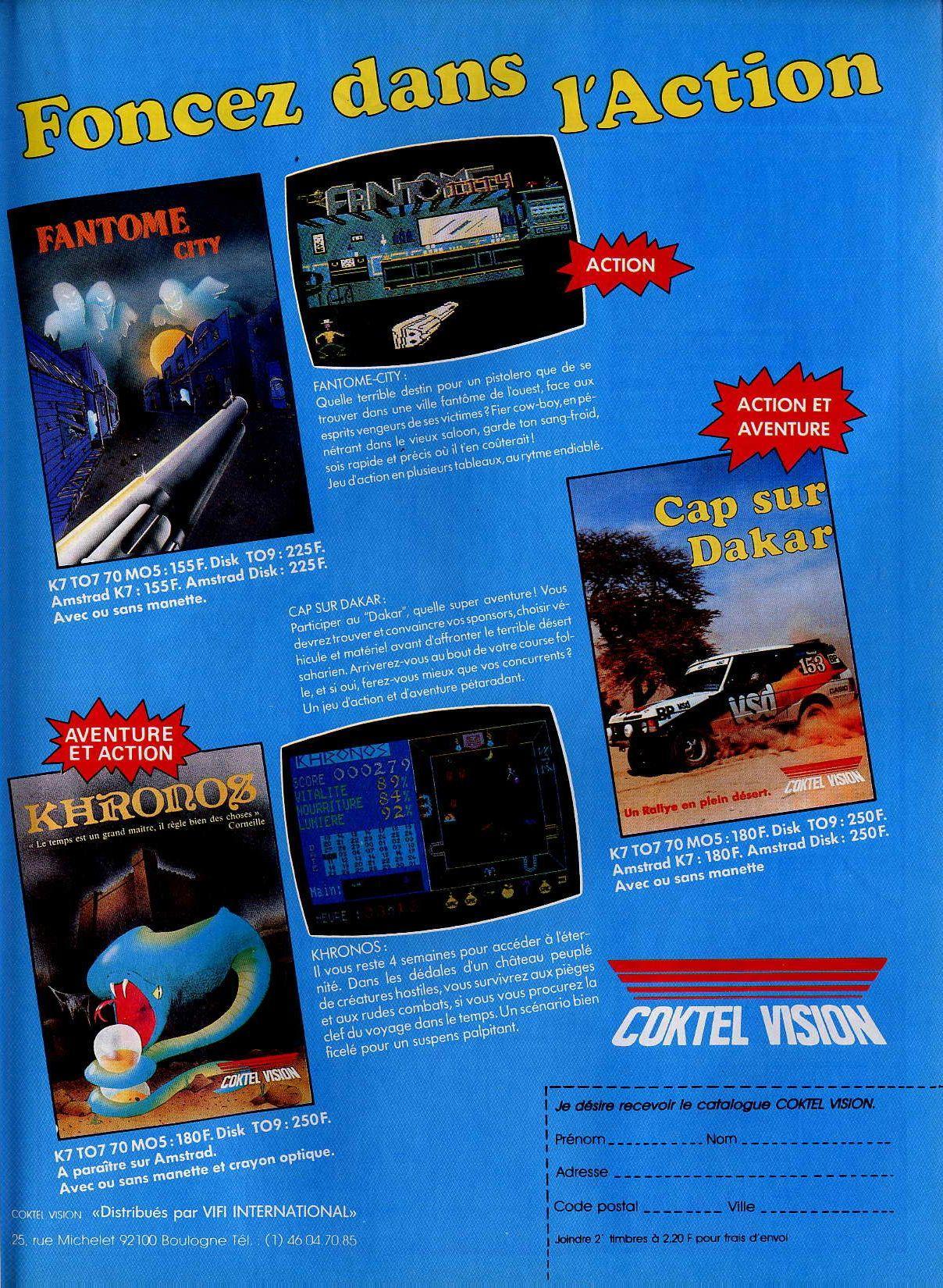
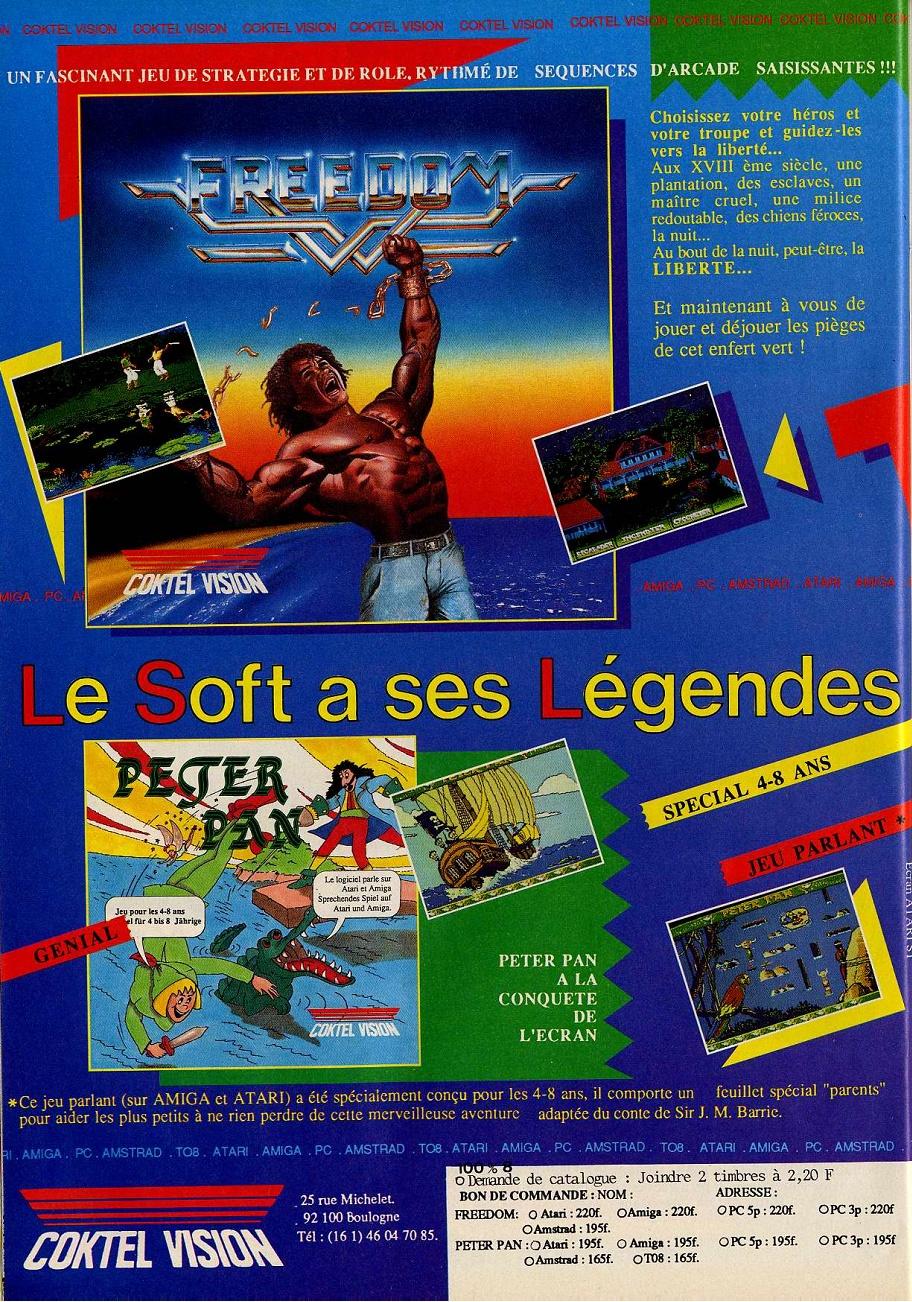
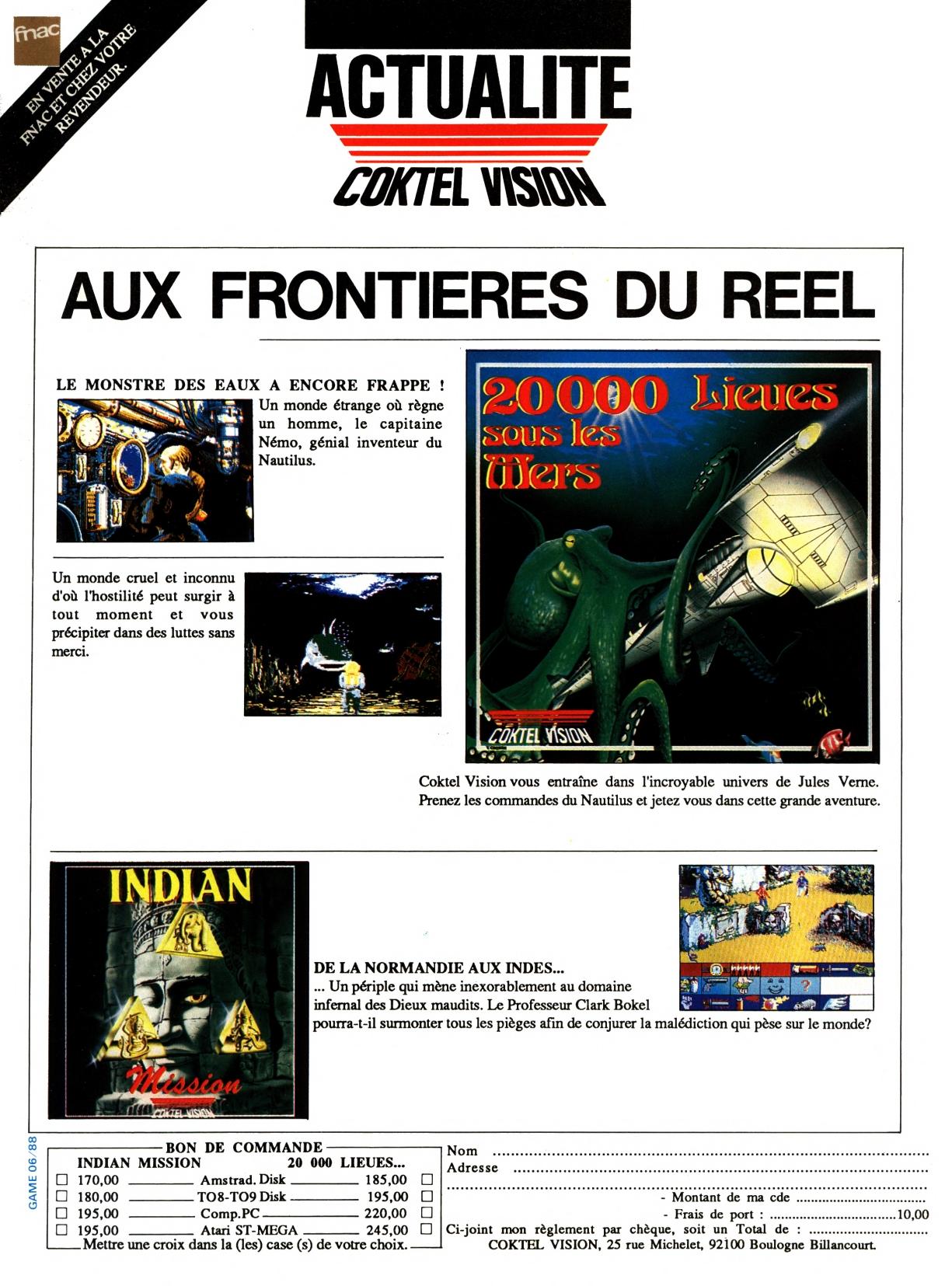
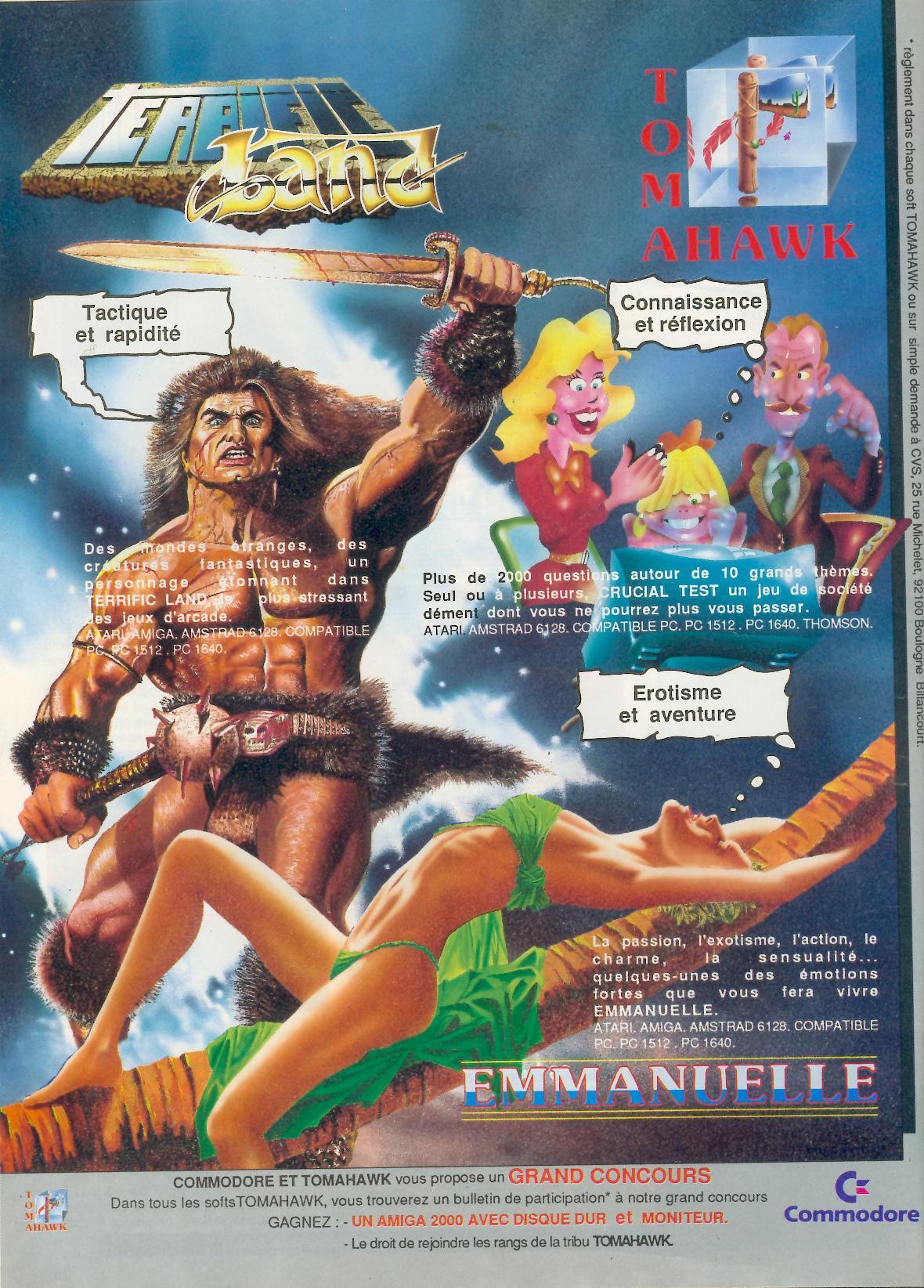
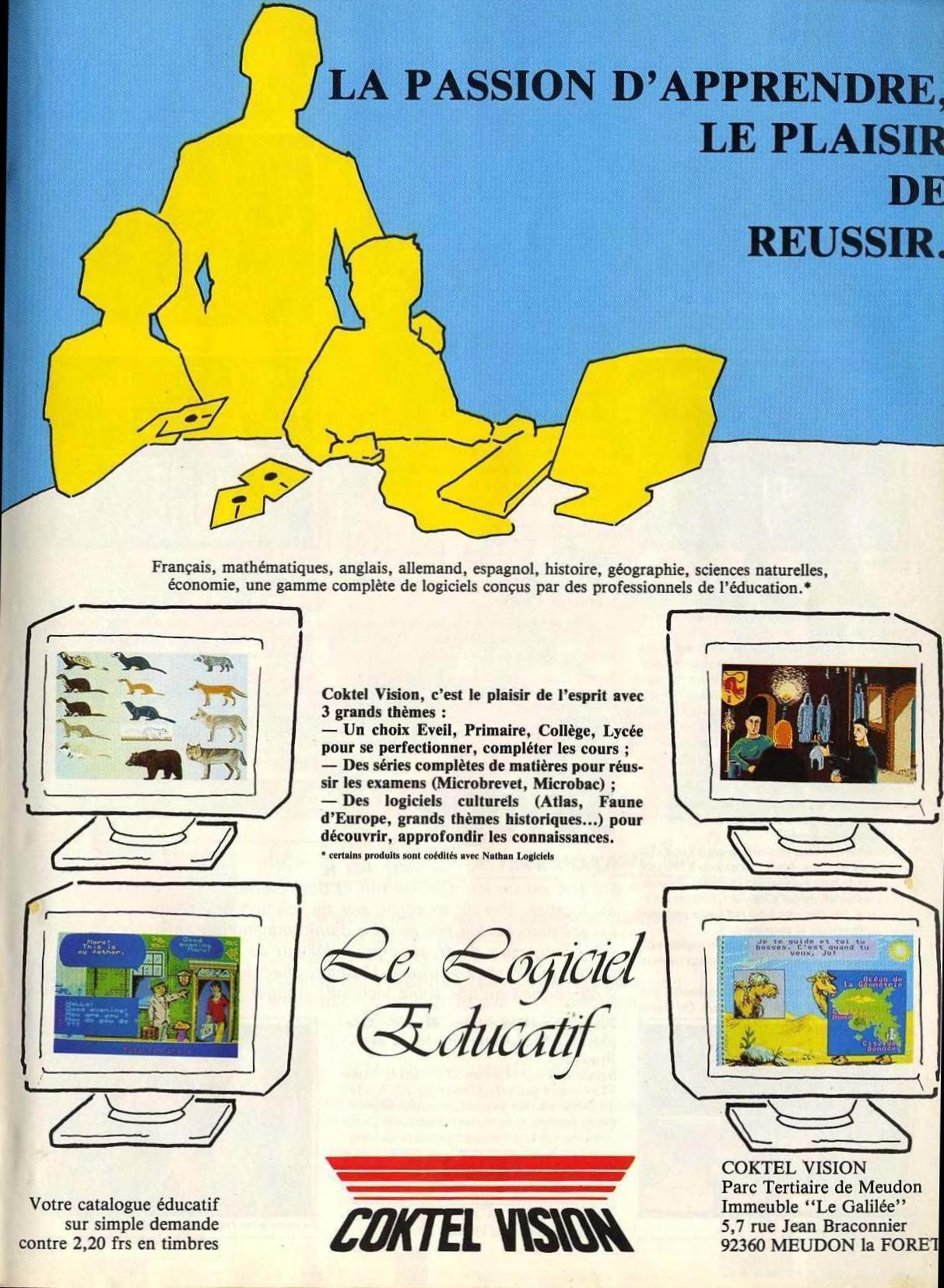
There was a time when the term 'Very French' was used as a short-form label for Gallic games that were deemed a tad offbeat. It would typically be found nestled within articles by journalists grappling for a better description and it hadn't gone unnoticed by those who worked in French game development. "The UK press considered games made in France to be 'different'," affirms Emma Kreuz, former PR manager of the Parisian publisher Coktel Vision. But there was a reason for this. They were different to an extent. French games were typified by their creative, high-quality coding, technology-pushing techniques and penchant for adventure/arcade-style titles. And Coktel Vision was among the pioneers. Founded in 1984 by engineer Roland Oskian, the publisher made an immediate impact in France by specialising in simulations, action and adventure games. "I was passionate about movies, music and Roland had worked for the space division at Matra and he saw a good business opportunity for software, believing it to have a great future. He also believed it was important for developers to be innovative and he would eventually see this as a key for success. "We had to fight the foreseeable rival of the Japanese giants with their consoles and define a real strategy," he says. Freedom of expression would play an important role. Also in 1984, issue 14 of the French videogame magazine TILT had published a lengthy article by journalist Guy Delcourt which not only explained that gaming was still in its infancy in France, but also found that developers valued originality and wanted to produce games which reflected their country rather than simply ape the more lucrative scenes of the UK and USA. One way of doing this was through narrative. The impressive graphic text adventures La Malediction De Thaar and Poseidon, both released in 1985, were evidence of that. Poseidon was cocreated by Jean-Yves Baxter and Michel Denajar with input from Laurent Korngold, Coktel's first employee. At the time, the company was tiny. "We began working in the Oskians' house," Laurent recalls. "Roland would create music and his wife made covers and produced graphics." Concentrating on games for the Thomson computers and the Amstrad CPC to begin with, the publisher soon grew. As well as producing titles for the gaming masses - such as Laurent's racing game Haid Sur Tenere -Coktel also sought to capture the educational market in a bid to appeal to parents and teachers. "I'd just finished my engineering studies when I met Roland at the beginning of 1985 and that's when I proposed Coktel publish software that would help French children learn English," says Coktel coder Arnaud Delrue. Released as Balade Au Pays De Big Ben, Coktel's first stab at such a title was followed by a mathematics game called Equations-inequations and the crossword app Mots Croises Magiques'. By 1987, edutainment titles were a key part of Coktel Vision's output and Arnaud had become the company's equivalent of a CTO. From the perspective of the general gamer, Coktel's golden period fell between 1985 and 1994 when it seemed to run at full speed with a plethora of releases. It mixed original games with lucrative licences, some of which were pulled from French-Belgian comics. Among them was Asterix Et La Potion Magique for the Amstrad CPC and Thomson MO and TO machines - a fun, cartoonlike platformer bundled with a mini-puzzle and a black-and-white comic called In 50BC. There was also Lucky Luke who starred in the 1987 game Nitroglycerine which tasked the hero with guarding a train over five episodes. Coktel also had its own characters, among them James Debug who made his debut in Marianne Rougeulle's platformer Le Mystere De L'lle Perdue. This provided mystery escapism and tasked players with collecting pieces of a cassette recorder. It nestled among more lacklustre titles as the beat-'em-up Duel puzzles, and it earned Muriel a silver medal from the Parisian department of culture, cementing a reputation for Coktel Vision in the process. Roland's decision to allow developers to experiment had paid off, creativity if not economically. As such, Coktel continued to greenlight some sterling original work: the slave rebellion game, Freedom - a title that mixed adventure with role-play, strategy and combat - certainly ensured Muriel was able to continue marking herself out as a pioneering game designer. The move was not always appreciated or understood. Issue 40 of Amstrad Action in the UK didn't know what to make of Freedom, for example ("For: strong plot, historical setting etc. Against: trite rubbish, bad taste, etc", it wrote). Eyebrows were also raised over Muriel' more daring adventures, notably Emmanuelle: A Game Of Eroticism in 1989, based on the novel by Marayat Rollet-Andriane about a woman on a voyage of sexual self-discovery. Muriel produced Geisha and Fascination in the same erotic vein, promoting women in lead roles years ahead of Tomb Raider. She continued this trend with the point-and-click adventure Lost In Time, a boundary-pushing title that blended graphics with live action. Muriel would later say that she wanted her heroes to use logic, intuition and persuasion rather than blast their way out of the situations they faced. It helped set Coktel Vision apart from other studios. ot that the publisher didn't pump out tried-and-tested games. It released Asterix At Rahazade (which was divided between a point-and-click and mazelike game). It also created more straightforward licensed racers such as Dakar 4x4 and Dakar Moto. At the same time, it continued to strengthen its educational portfolio and so a decision was made. "We created Tomahawk as a trademark label for the games and used Coktel for the education software," says Arnaud. Another division, MDO, was created too. Named after Matthieu Marciacq, Arnaud and Roland, this was responsible for the bulk of the company's engineering, leaving graphic and design to be produced from Coktel's offices on the outskirts of Paris, in 9 Rue Jeanne Braconnier, 92360, Meudon-la-Foret. All the technical departments were placed within MDO and the games it worked on included Muriel' Gobliiins series which she developed alongside Pierre Gilhodes from 1991. [...] WHERE ARE THEY NOW?
|