★ AMSTRAD CPC ★ PEOPLES ★ SOFTOGRAPHIE ★ VAUGHAN DOW ★ |
| Vaughan Dow | Games - Auteurs |
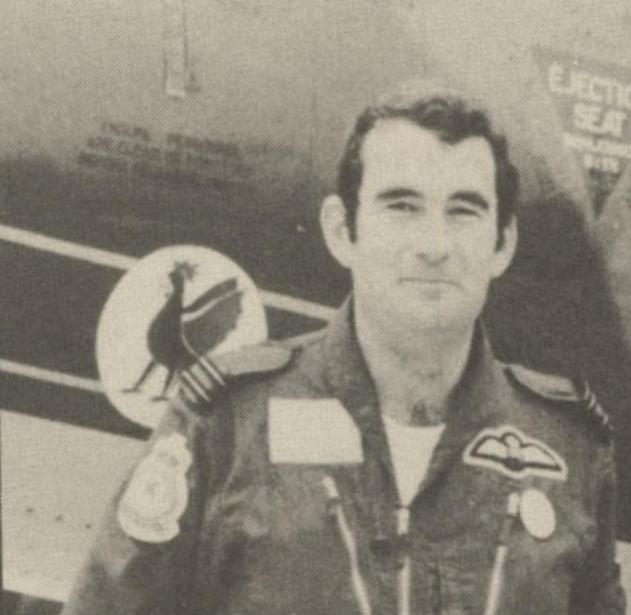
There can't be many computer programmers with more first-hand knowledge of their subject than former RAF Harrier jump jet pilot, Vaughan Dow. His latest game for Anirog is Jump Jet, a flight simulation which also combines combat action. Vaughan, who now works as a pilot for Dan Air, was also responsible for the highly successful Flightpath 737. He became interested in computer programming when he bought a Commodore 64 in October 1983 for his children. “I thought I would learn the basics to teach the kids,” he says. “At the time I was also working as a flight simulation instructor for Dan Air. I was sure I could do something by way of programming a comparatively simple flight simulation game.” The result was Flightpath 737 which has gone on to notch up sales of around 60,000 so far. Encouraged by the success of Flightpath 737, Vaughan then turned his mind to Jump Jet which involved “far more complex programming.” Vaughan says Jump Jet is “as accurate a representation of the problems of Jump Jet flying as the computer will allow.” He is now working on another program but will not say what it's called or what it is about. CV+G
|