APPLICATIONSDIVERS ★ Unichem hope to Prosper + ★

Prosper+Applications Divers
★ Ce texte vous est présenté dans sa version originale ★ 
 ★ This text is presented to you in its original version ★ 
 ★ Este texto se presenta en su versión original ★ 
 ★ Dieser Text wird in seiner Originalfassung präsentiert ★ 

Unichem are launching their Prosper+ ordering and labelling system to potential users at a series of evening meetings around the country over the next three weeks.

Installation will begin in March and Unichem say they have a waiting list of 400 members interested in receiving the system. Prosper + (see C&D Dec 20/27, 1986, P1028) incorporates the features of the combind Prosper and Scriptwriter systems with a number of additions.

Facilities include: prescription labelling; order entry and transmission; form statistics; batch labelling; and file maintenance. Access to the PINS system is included as standard for no extra charge other than normal registration fee to the Pharmaceutical Society.

Prosper+ runs on a standard Amstrad 6128 microcomputer with a Citizen printer. The system holds up to 1,200 drugs and 80 form codes on file, all fully maintainable by the user. A further 50 or so Latin instructions make up the basis of the labelling facility. Ordering and order transmission operate in the same way as Prosper. Subscription to Prosper + will cost members £15 per month more than the existing Prosper system.

Unichem's 'plus' system's plus points

Unichem are developing enhanced systems for use in the pharmacy.

Prism-plus, based upon the IBM PC XT286, was introduced in July 1986 and provided a harddisk version of Prism with significant advantages in speed and flexibility, say Unichem. It is part of the DHSS Prescription Pricing Authority trial and is successfully transferring data to the PPA. The system will be further extended shortly to offer multi-user facilities so that busy dispensaries can provide each dispenser with their own work station on the Prism system EPoS and limited patient medication records are under consideration. The speed of the equipment allows other applications in off-peak periods such as ledgers, payroll, - wordproessing, spreadsheets, etc, say Unichem.

First installations of Prosper-plus will _____ place in February and will offer the combined features of Prosper and Script ___ one machine , the Amstrad 6128.
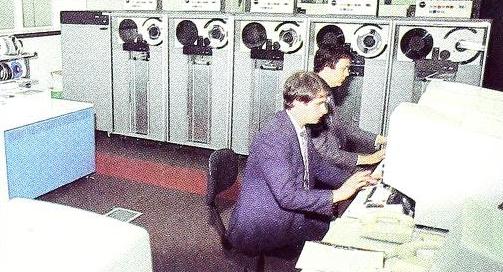
Computer controllers ‘tap in' at Unichem >>

Unichem have a "waiting list" of around 150 so far. The system will be available on a rental basis — a free trial period will be offered to both existing users and non-users. The system contains comprehensive labelling facilities, ordering, and order-transmission, Unichem say.

Early in the New Year Unichem will release another system with a wide range of features at "an extremely low price". This system is planned to fill the gap between the Prosper-plus and Prism. Lower cost combined with rental or lease options will make it attractive to the pharmacist and provide affordable computer facilities for all sizes of pharmacy, says the company.

Prosper-plus, the new system, and all variations of Prism have the ability to access he Pharmaceutical Society's new PINS system, via the same modem or acoustic coupler used for Prosper ordering. Unichem Ltd, Unichem House, Cox Lane, Chessington , Surrey.

C&D

★ PUBLISHER: Unichem
★ YEAR: 1987
★ CONFIG: ???
★ LANGUAGE:
★ LiCENCE: COMMERCIALE
★ AUTHOR(S): ???


★ AMSTRAD CPC ★ DOWNLOAD ★

Aucun fichier de disponible:
» Vous avez des fichiers que nous ne possédons pas concernent cette page ?
Je participe au site:
» Vous avez des infos personnel, des fichiers que nous ne possédons pas concernent ce programme ?
» Vous avez remarqué une erreur dans ce texte ?
» Aidez-nous à améliorer cette page : en nous contactant via le forum ou par email.

CPCrulez[Content Management System] v8.732-desktop/c
Page créée en 024 millisecondes et consultée 92 fois

L'Amstrad CPC est une machine 8 bits à base d'un Z80 à 4MHz. Le premier de la gamme fut le CPC 464 en 1984, équipé d'un lecteur de cassettes intégré il se plaçait en concurrent  du Commodore C64 beaucoup plus compliqué à utiliser et plus cher. Ce fut un réel succès et sorti cette même années le CPC 664 équipé d'un lecteur de disquettes trois pouces intégré. Sa vie fut de courte durée puisqu'en 1985 il fut remplacé par le CPC 6128 qui était plus compact, plus soigné et surtout qui avait 128Ko de RAM au lieu de 64Ko.