| ★ APPLICATIONS ★ CREATION MUSICAL ★ MUSIC MASTER ★ |
| MUSIC MASTER (Amstrad Magazine) | MUSIC MASTER (Amstrad Action) |
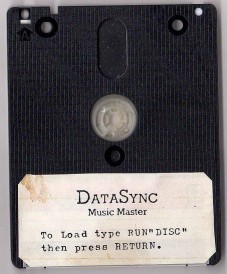
This is the software package marketed to go with the Maestro amplifier and speaker system It comes on cassette or disk and loads without difficulty. Unfortunately, once loaded you start to wonder whether it's worth the £16 asked for it. The screen shows three octaves of keyboard, and when you press a key you can hear the corresponding note. The keyboard can be transposed up and down to cover a full eight octaves and you can select any of six voices for the notes. The six function keys f4 to f9 give you rather poorly enveloped percussion sounds. A foreground track can be laid over one or two background tracks. All this sounds rather good, until you realise that it's all Music Master can do! You can only lay down notes in real time, and when you've laid down a backing track (which has to be the right length and in perfect tempo) you must then play Che accompaniment and melody line without stopping. I'd be interested to hear of anyone other than a trained musician who can do this without error. So sophisticated is Music Master that Vanguard doesn't seem to think it needs a manual, printing brief instructions instead on the back of the box. They contain some odd English, suggesting that DataSync, the people who wrote the program, are from abroad. A pity someone at Vanguard couldn't have edited it through. Verdict When you consider that Rainbird's Music System , with which the Music Master is comparable in price, offers a scrolling manuscript display where you can enter music note by note, as well as a keyboard and synthesiser module to create as many voices as you want, you might feel, as I do, that Music Master is vastly over-priced. AA#13 |
|  |
|
Page créée en 835 millisecondes et consultée 4023 fois L'Amstrad CPC est une machine 8 bits à base d'un Z80 à 4MHz. Le premier de la gamme fut le CPC 464 en 1984, équipé d'un lecteur de cassettes intégré il se plaçait en concurrent du Commodore C64 beaucoup plus compliqué à utiliser et plus cher. Ce fut un réel succès et sorti cette même années le CPC 664 équipé d'un lecteur de disquettes trois pouces intégré. Sa vie fut de courte durée puisqu'en 1985 il fut remplacé par le CPC 6128 qui était plus compact, plus soigné et surtout qui avait 128Ko de RAM au lieu de 64Ko. |