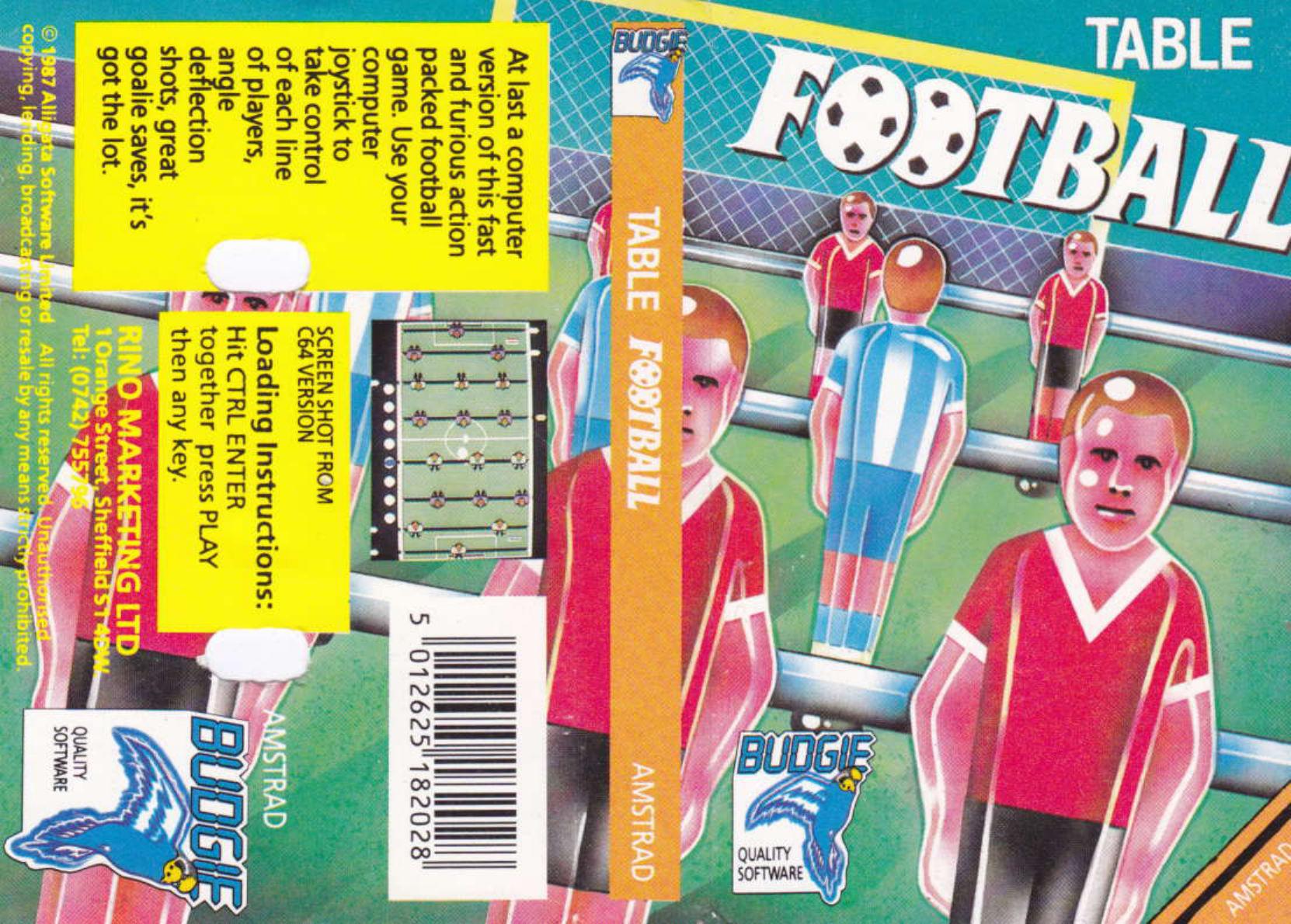
The people who programed this game must have known somebody whose friend once played table football — but had a bad memory. So they've produced a game that's slow, lacking in skill and about as rivetting as a Wimbledon rain commentary. Apart from that minor problem, the presentation is very good. The screen display depicts the table from above, the same view that you'd get playing the real thing. So to add a touch of realism, why not play with your telly lying on its back. This is a joystick or keyboard controlled two-player game. Each player has control over the regulation four rods of players: two sets of three strikers, two defenders and a goalie. The rod of players nearest the ball is activated as you play, but there's no attempt to si mu I ate the hectic grabbing of rods to be found in the real thing. When a player scores, there's one of those digital flashes across the screen, together with a quick burst of music. The score sequence is probably the liveliest thing about this game. Since there are eight balls per game, you have eight opportunities for fever-pitch excitement.  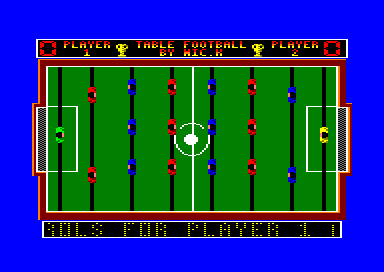 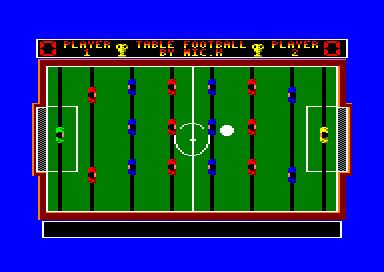 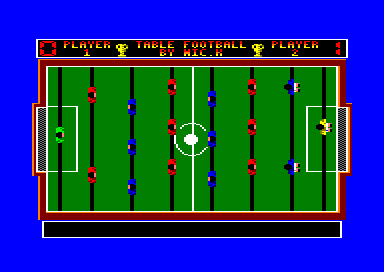
What makes this version of table football so naff? Well, I won't say it's slow but my bus pass expired before the ball reached the penalty area. The ball moves slowly, the players flick the ball slowly and the rods move up and down slowly. Since this accounts for all the moving parts, it's pretty slow going. What's good a bout this game? Well, there is no way of trapping and holding the ball, and dribbling it between two players on the same rod. As this is exactly what true table football experts do all the time, they won't be able to show you up here. There can be no arguments and eventual broken noses about spinning the rods. Neither can you score an ace smash goal from the back with your goalie, you just can't hit the ball hard enough. So as not to end on a sour note, I'll mention that the angles and deflections play realistically, the players themselves look graphically solid and there's a reasonable rendering of that great Watney's classic "Roll out the Barrel'. Add to that the fact that most of the fun is derived from the two-player setup and you have a game that's reasonable at £1.99. Had it been £2 l'd have felt ripped off. Bohdan Buciak
|