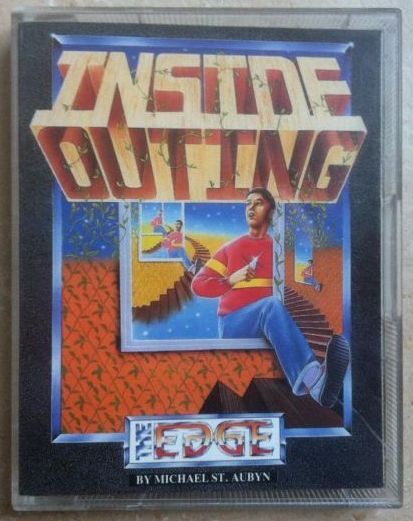
Inside Outing is a treasure hunt in which you wander aroun d a house looking for jewels. The jewels are hidden and you must find them by solving a number of puzzles in the maze of rooms. When you have found a jewel it must be returned to the owner of the house who is in one of the bedrooms The screen display, game format and main character are all very similar to Get Dexter. There are twelve jewels to be found and devious puzzles must be solved to get the jewels One jewel is in the snooker table and to get it you must pot all of the balls on the table in the correct order. If you do then the jewel will drop out Unfortunately the jewel is under the table and you must then find a way to get it out from under the table.  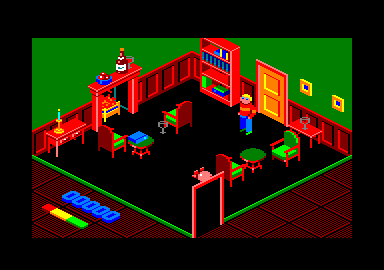 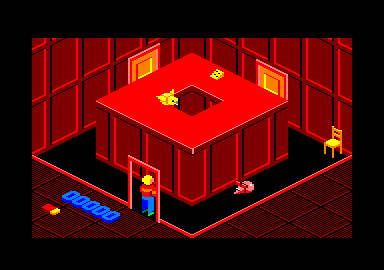 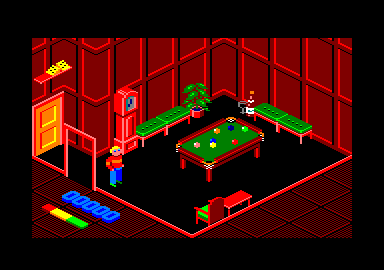
Objects come in three varieties: the first can not be moved, the second can only pushed or pulled and the third can be earned around You can jump on top of objects to help you reach higher and stack objects one on top of the other. Most of the rooms contain birds a mice that drain your energy when they touch you. You can replenish your strength by drinking wine from glasses found in many rooms. The characters are big and well animated with colourful scenery in the rooms. There is no tune in the game but there are effects such as your footsteps and a ringing telephone. iF you like this type OF exploration game then inside Outing could keep you occupied for a long time There are many games of this type and it's no worse than any of the others, but I am getting a oat tired of the format. - FIRST DAY TARGET SCORE : Collect two jewels
- GREEN SCREEN VIEW : No real problems except for the snooker table which a bit tricky in green.
GBH , AA |