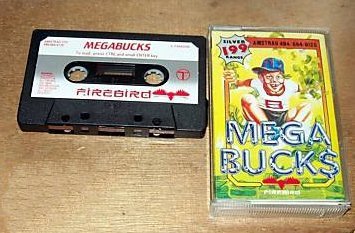
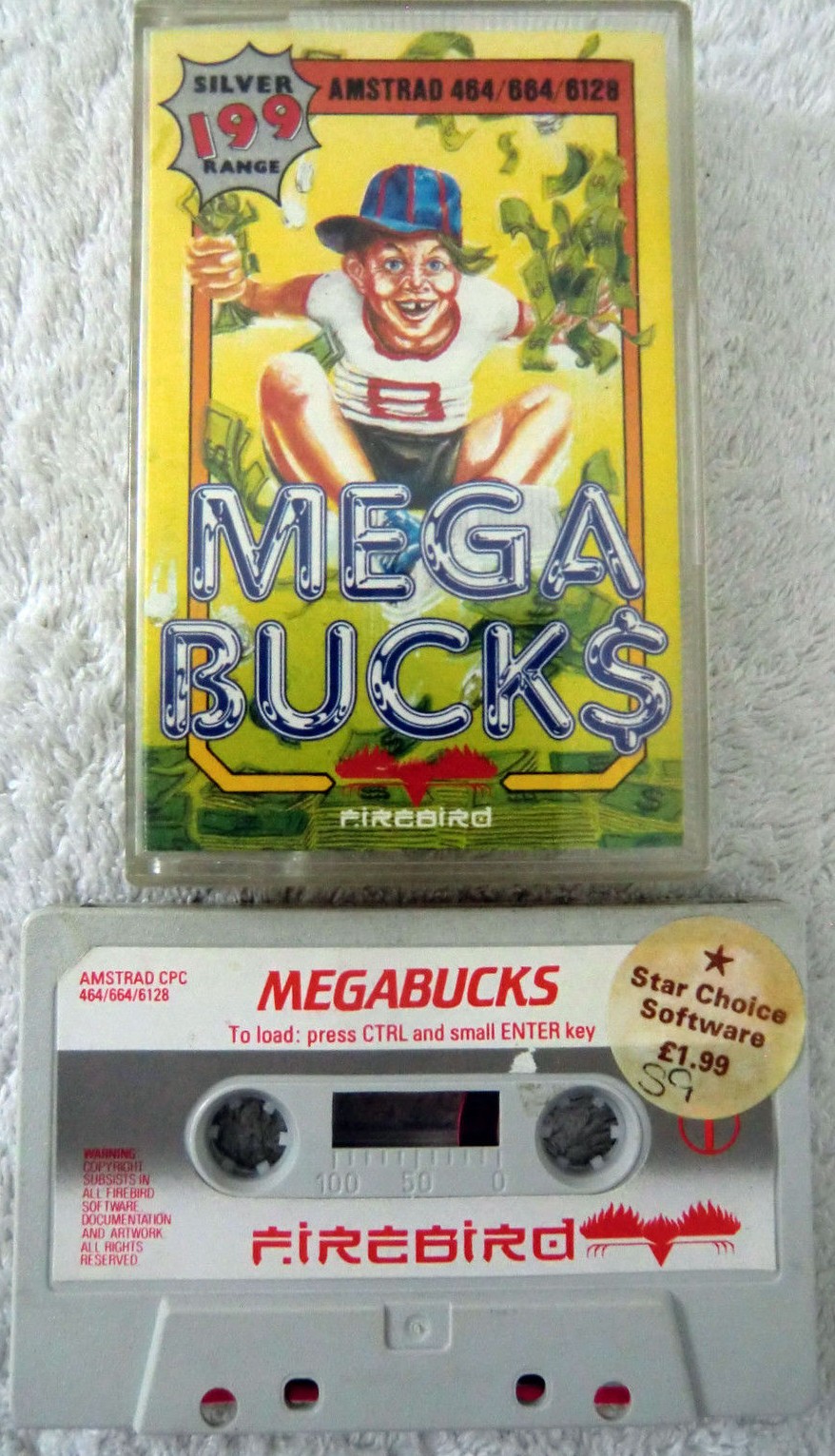
Your extremely rich and eccentric uncle. Maxi-billion III, has passed away and left his billion dollar fortune to you. Unfortunately your uncle was mean and shrewd and before he died he hid a video tape that holds the key to the inheritance. The estate is made up of many flick screen rooms where you find objects to help in unravelling the mystery In the lower part of the screen is a message window where useful bits of information appear If you press on the fire button then a menu appears with an assortment of icons: pick up, drop, use, cancel, off and abort. Take care with the off icon because it resets the computer and you'll have to re-load the game. The cancel icon exits the menu and the abort one restarts the game. The others are concerned with object interaction Graphically it's nothing special with poor animation and little colour. Sound is limited to spot effects and there are no tunes. Almost as soon as you start to play you'll begin to notice similarities between this and Spellbound and the other Magic Knight games. The main difference is the use of icons rather than text to select options. Other than that the gameplay is almost identical. If you liked the Magic Knight games then you'll probably enjoy this . GBH 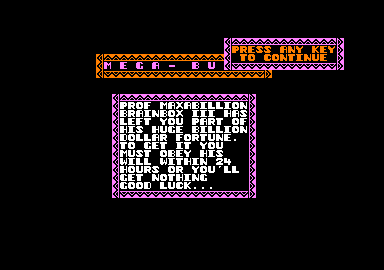 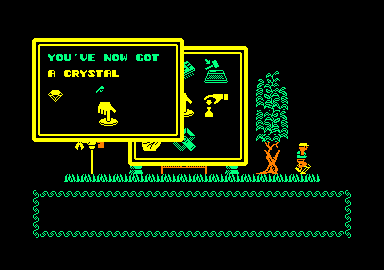 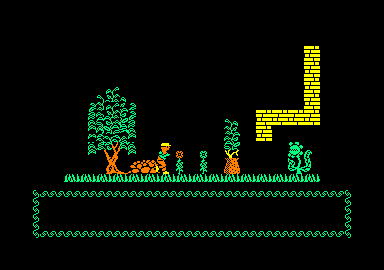 ] ]
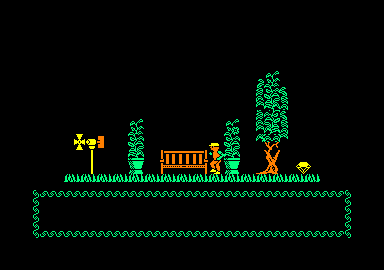
Tout débuta par une sombre histoire d'héritage. Un oncle millionnaire fou d'électronique, une maison bourrée de systèmes de détection et de pièges, un neveu qui aimerait bien toucher le pactole. Et moi, au milieu de tout ça, me démenant comme un beau diable pour que ce soit le jeune imbécile qui ramasse le paquet, Pourtant, parcourir des salles et des salles, me servir des icônes pour récolter, jeter, utiliser tous les objets qui traînaient de-ci de-là, tout ceci n'était pas pour me déplaire. De plus les graphismes simples mais clairs et précis, une bonne animation, le système des icônes formaient un tout attrayant. 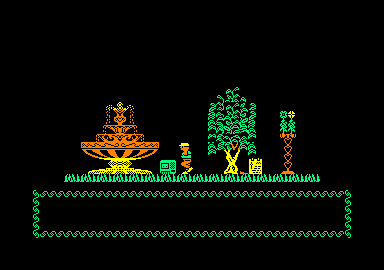 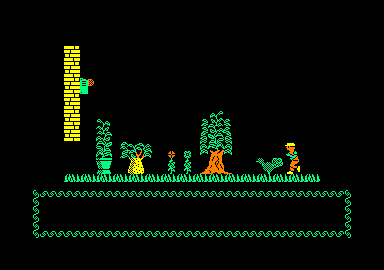
|