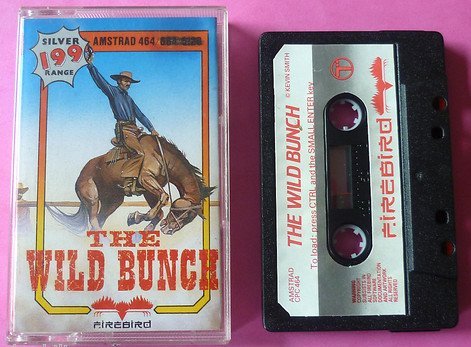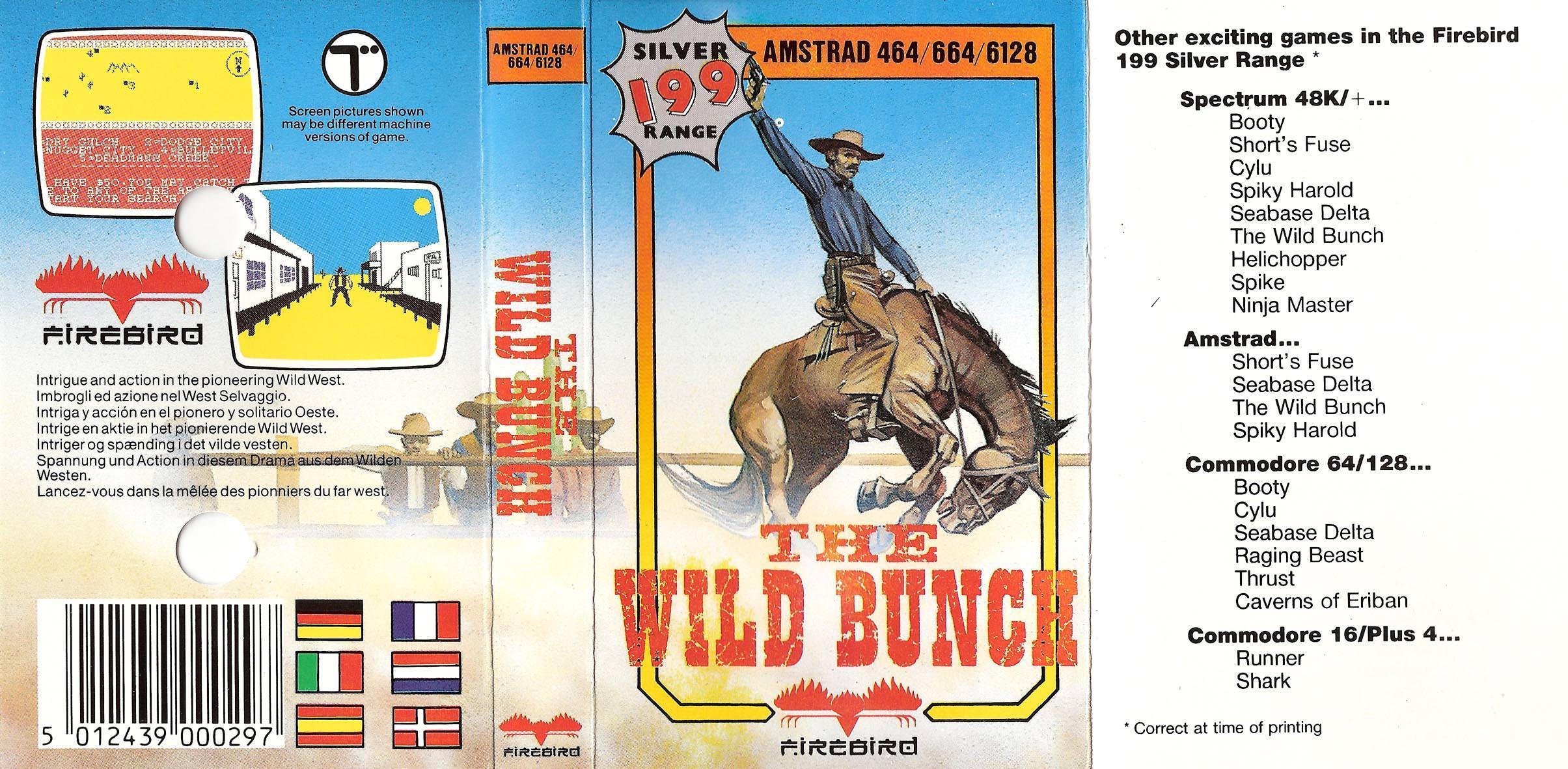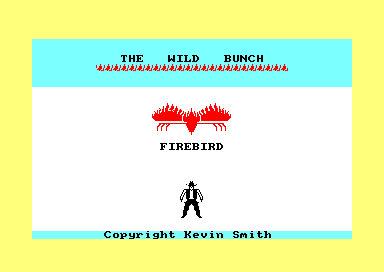 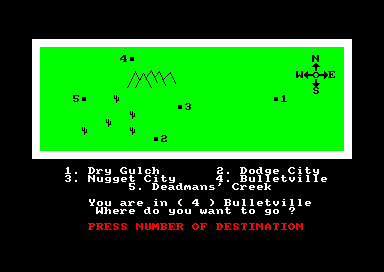
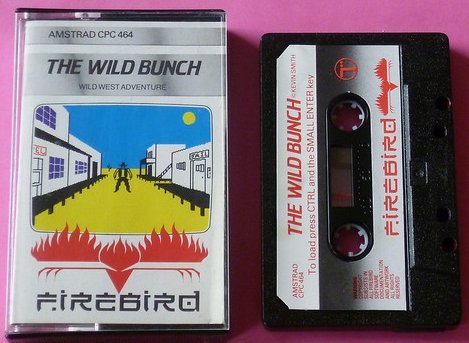
One of the rising stars of Firebird's silver catalogue is without doubt The Wild Bunch. It's a simple, well implemented, idea that, although not a classic, clicks into an engrossing and addictive game just what a cheapie should be. Whilst billed as a 'wildwest adventure' it relies more on strategy elements than a conventional adventure. You are presented with the scene where you are, wrongly, accused of murder. Whilst pursued by the Pinkerton Agency you must identify and capture the member of the wild bunch who did the foul deed. This involves travelling to various towns where you can challenge strangers to a gunfight. Various facial characteristics relate the figures to wanted posters on show in the sheriffs office and part of the strategy element relies on keeping tabs on. and identifying, the correct one. Picking the innocent town mayor for a shoot out does little to raise your social standing. The telegraph office also provides valuable information on
the whereabouts of the bunch and of the Pinkertons. Several towns need to be visited in order to solve the problem - travel and sustanance both need money and the best way to boost this is in the poker games of the saloon, if you can avoid getting too involved with the firewater. It is predominantly menu driven, the graphics are effective additions to the game, the shoot outs are particularly good, and both these, the wanted posters and the poker cards actually contribute to the game, which is a welcome point. Tony Kendle , Popular Computing_Weekly | 














 +
+