| ★ AMSTRAD CPC ★ GAMESLIST ★ JACK THE RIPPER (c) CRL ★ |
| Gamemag | Amstrad Magazine | The Games Machine | Aktueller Software Markt |
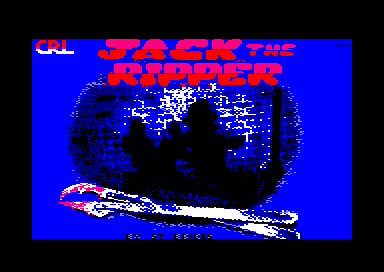
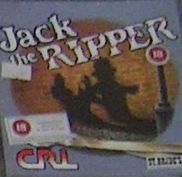
Joint authors (you can decide among yourselves in which context you wish to view the word joint!) of Jack The Ripper, the latest adventure release from CRL, are none other than the St Brides ladies - or more specifically - Marianne Scarlett and Priscilla Langridge. These writers' previous claims to fame include Bugsy, The Secret Of St Brides and The Very Big Cave Adventure, none of which impressed me very much. However, it seems that the ladies have matured somewhat in their approach to the adventure world (even if they do still behave strangely in public) and Jack The Ripper is the first of their games which has actually held my interest for more than 20 minutes.
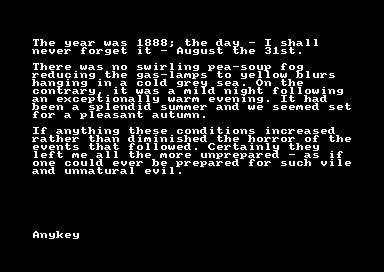
Set in the year 1888, when olde London Towne was in the gnp of the evil Ripper, the player Is put in the unenviable position of being suspected by the Peelers as having more than a passing interest in the recent horrific murders. They do in fact seem to think the player is the Ripper and are intent on both catching him and putting an end to his gruesome vocation. The adventure begins as you discover the horribly mutilated body of a young woman, examination of which not only produces one of the many tasteless pictures to be found within the game (as Mel Croucher discovered in THE GAMES MACHINE Issue 2, even the St Brides ladies couldn't bear to look at them) but also two scraps of paper and a bloody knife. Taking the weapon is a dumb move so stick with the paper and don't forget to pocket it before leaving the scene of the crime. Putting aside the censorship hype and the less than agreeable topic of the adventure, Jack The Ripper is professionally implemented and quite exciting to play, the three parts included also add to the package by making it value for money a must for those of us over 18! ATMOSPHERE 82% |
|  |
Page créée en 004 millisecondes et consultée 4446 fois L'Amstrad CPC est une machine 8 bits à base d'un Z80 à 4MHz. Le premier de la gamme fut le CPC 464 en 1984, équipé d'un lecteur de cassettes intégré il se plaçait en concurrent du Commodore C64 beaucoup plus compliqué à utiliser et plus cher. Ce fut un réel succès et sorti cette même années le CPC 664 équipé d'un lecteur de disquettes trois pouces intégré. Sa vie fut de courte durée puisqu'en 1985 il fut remplacé par le CPC 6128 qui était plus compact, plus soigné et surtout qui avait 128Ko de RAM au lieu de 64Ko. |