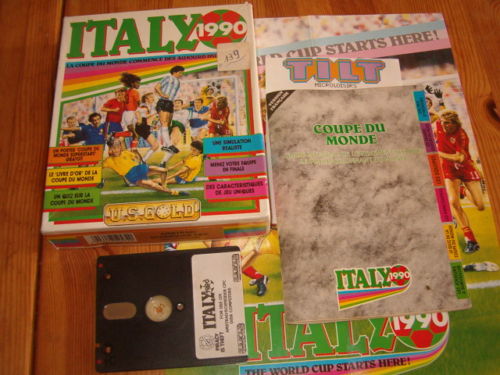
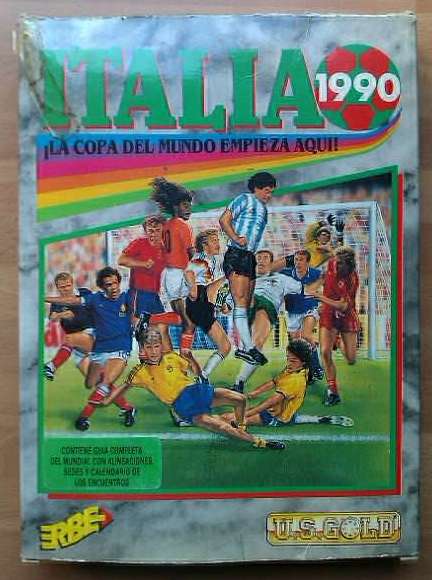
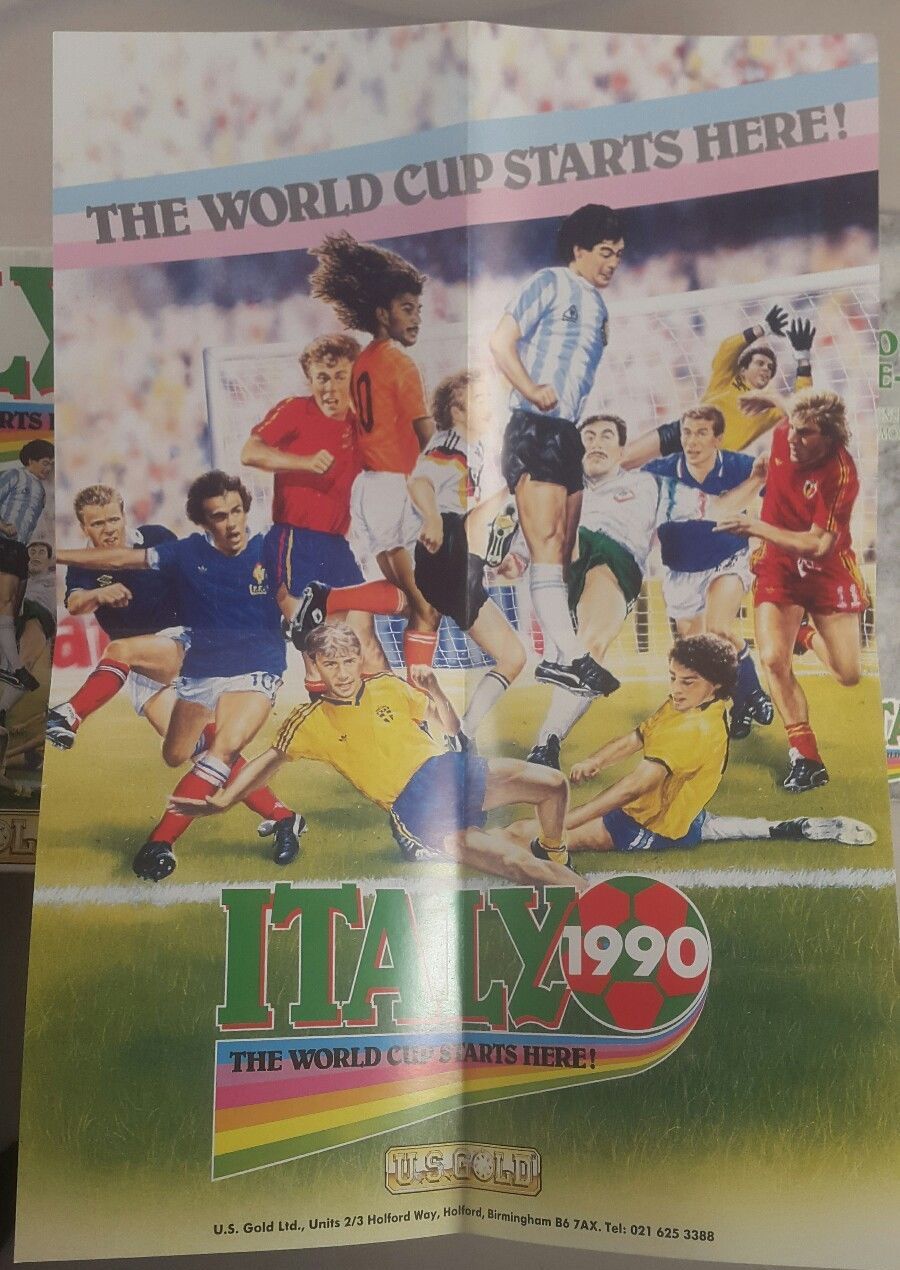
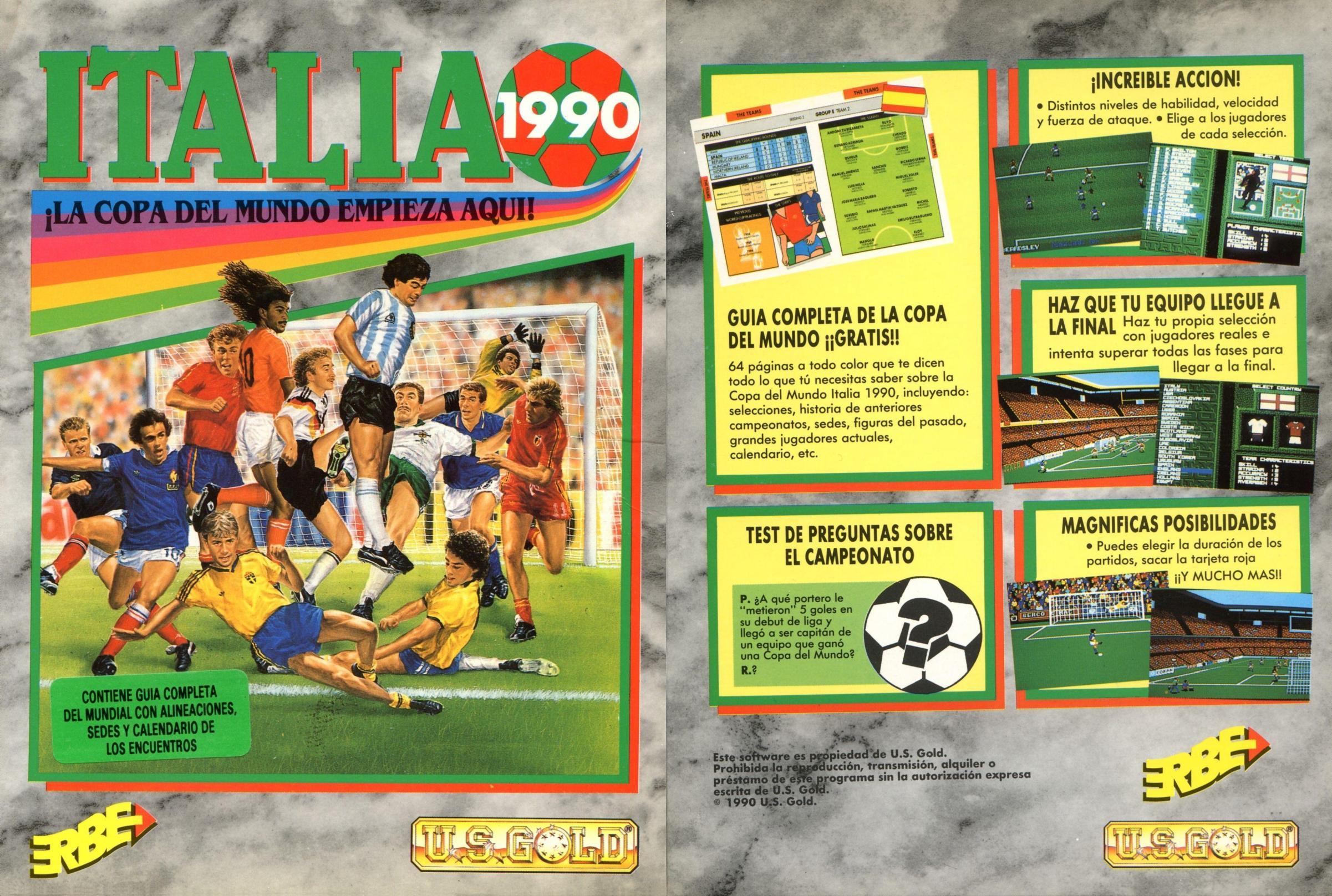
"And they think it's all over... It is now!" heralded England's 1966 World Cup triumph. Can history repeat itself? Find out this summer in Italy 1990. In yet another footie game, the Goldies bring you the whole tournament, wrapped, packed and ready to play. It's 13,000 square yards of prime Italian turf, shoehorned into a box. All very well but, does it play like a Brazilian or a Korean? The football sim midfield has become a little clogged recently, and it takes a good team to set up a goal scoring chance. And that's exactly what US Gold has done. As Des Lineham would say in a game of 90 minutes, Gold's scored the winning runs, with the final punch of the fight.   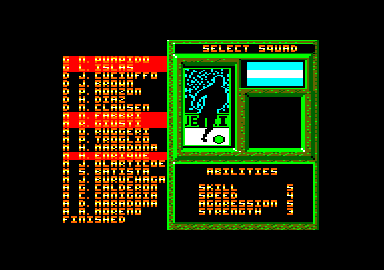
Italy 1990 is set, not surprisingly in Italy, in the year of our Lord 1990. The venue's the World Cup, and you can be anyone you want as long as they qualified. So if you support France or Wales, TOUGH! The game's a straight replica of the tournament as it will be played. There's the choice of one or two-player friendlies, as well as the chance to lift that famous trophy above your bonce if you win. Playing couldn't be easier, in theory, An arrow marks the man you control, and keys or joystick send him scurrying around. The reason for the reservation, though, is totally good, because this baby's fast, really eye-numb-ingly fast! So for the first few passes, you'll find the guy you thought was going for the ball tackling a Cortina in the car park. With sharp, small sprites, the animation's smooth and accurate. Tacklers slide, goalies dive, and the set pieces all have great little sequences of their own. Added to this are some great sundry pics that give the game a solidit, previously unheard of in soccer specials. TV announcers tell you about the matches, an electric scoreboard informs both players and crowd of goals, free kicks etc, while during the team squad selection both shirt colours and player descriptions are displayed. The World Cup is where the game's essentially at. The two-player games are excellent fun, but only have personal riv-ialry for motivation (iia/ I won 13-10! - ed) but this cannot compare with the thrill of chasing football's greatest prize. Play well here and the life gets tense as you wait to see whom the next round brings. 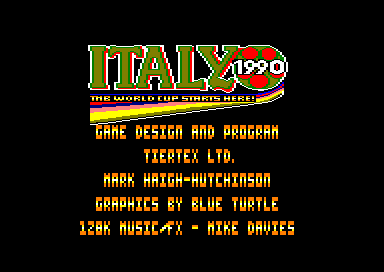 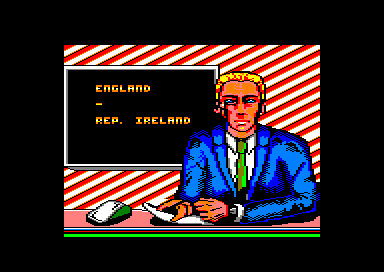
With a variable match length it can oe either a sudden death, first to score sort of game (2 mins each way), or a mammoth test of skill and stamina (45 mins). The one disadvantage of the long game being, if you draw Cameroon, you cease to care about goals after the first 1,000! Expertly programmed and eminently playable, Italy 1990 has one weakness, it's too easily beaten. The first time I played the tournament section - albeit in 2 min mode - England waltzed off with the cup! So, there was a penalty shoot out against Italy in the quarter final (a really great section), but it still meant that the prime attraction for the game was over, kaput, finito. Italy 1990 is a superb soccer game, that can expect a long life in the drives of many joystick strikers, simply because it's one of the best soccer sims ever on the CPC. If the tournament had been tougher it would have claimed the mantle of the best full stop. It doesn't quite make that grade, but as the hype machine hits top gear, it's reassuring to see that game lives up to the pre-match palaver. As time ticks on in the World Cup Sims competition, the Goldies have beaten the offside trap and seem certain to score a winner! FIRST DAY TARGET SCORE: Win the cup in two min' mode TW, AA
|