| ★ AMSTRAD CPC ★ GAMESLIST ★ GRIDTRAP (c) LIVEWIRE ★ |
 |
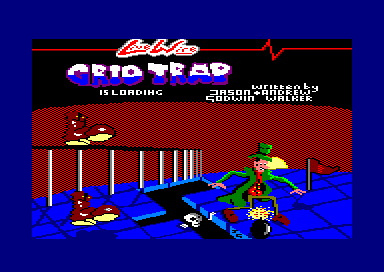
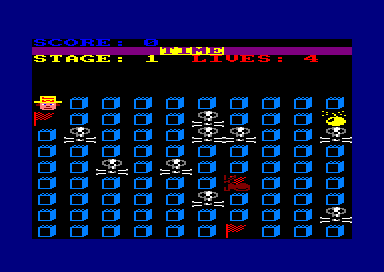
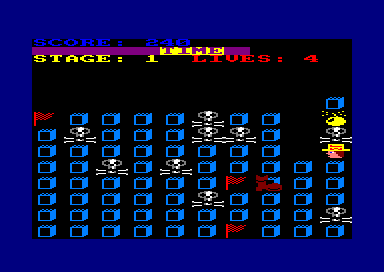
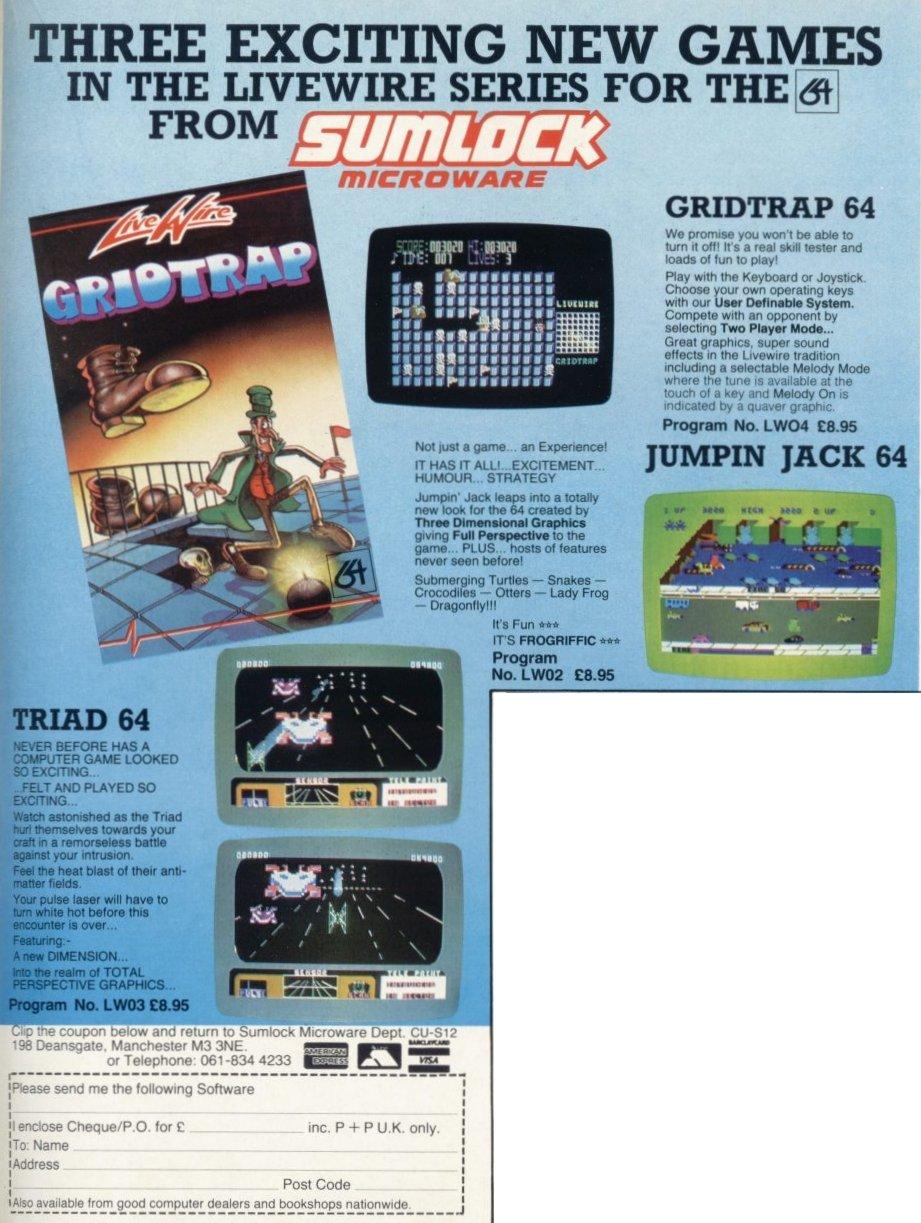
But if maze games happen to be your cup of high tea, Gridtrap can hold its own with most. The graphics are simple: a 90-box (10 X 9) grid which Mr. Livewire travels across, erasing boxes as he goes. The goal is to defuse time bombs that appear onscreen with a 30-second fuse. As soon as Mr. Livewire defuses one (by stepping on it —let's see the bomb squad try that) another appears, up to five. If the countdown reaches 15, a second bomb appears onscreen simultaneously with the first. You'll have plenty of time to reach the bombs if you utilize your ability to scroll Mr. Livewire off the left of the grid and back on the right, or off the top and on the bottom, and vice versa, vice versa. Boots appear onscreen which can stomp Mr. Livewire, but they don't chase him very actively at the lower levels. Skulls, deadly to the touch, occupy some squares, but they stay put and can easily be avoided. Your main enemy is yourself, your main danger lying in erasing so many boxes in your travels that you find yourself unable to reach a ticking bomb. Even then, you can scroll rows of boxes toward you. but occasionally you will reach an impasse. The game includes such touches as a pause feature and the ability to define your own keys for keyboard play. If you want to skip entering your initials and seeing your place in the Hall of Fame after each round, tough. In its basic gameplay, Gridtrap is like many other maze games. Unlike many other maze games, it has wit, requires strategy, and reflects some care on the part of the designer.
|
|  |
Page créée en 547 millisecondes et consultée 2100 fois L'Amstrad CPC est une machine 8 bits à base d'un Z80 à 4MHz. Le premier de la gamme fut le CPC 464 en 1984, équipé d'un lecteur de cassettes intégré il se plaçait en concurrent du Commodore C64 beaucoup plus compliqué à utiliser et plus cher. Ce fut un réel succès et sorti cette même années le CPC 664 équipé d'un lecteur de disquettes trois pouces intégré. Sa vie fut de courte durée puisqu'en 1985 il fut remplacé par le CPC 6128 qui était plus compact, plus soigné et surtout qui avait 128Ko de RAM au lieu de 64Ko. |