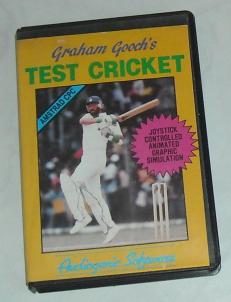
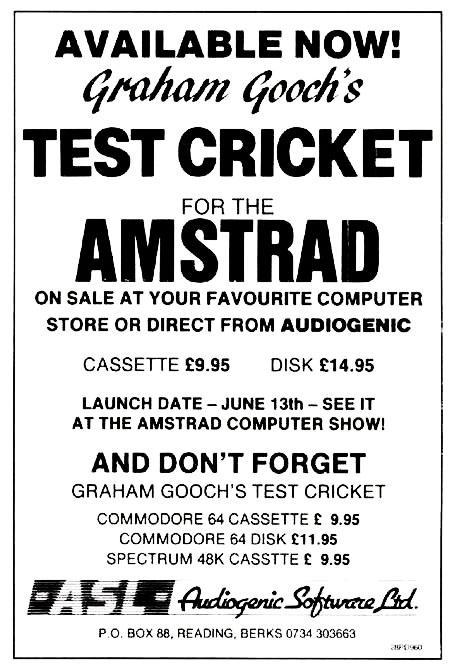
Graham Gooch's Test Cricket was a very appealing game on the Commodore 64 While Audiogenic has certainly taken its time with conversions, the Amstrad version is now out. and the good news is that the game looks much the same. The startling green pitch of the 64 version looks even more lush on the Amstrad. the players are just as chunky and blocky. and the play centres again purely at the wicket and the boundary. The appeal of this title rests largely in the variety of discernible bowling techniques and strokes played, and the smooth animation The figures are large (and thus inevitably blocky) rather than matchstick men and you can see what's going on You are given an England v Australia scenario, and a pool of twenty players to choose from. Time to emerge from your dust covers, down a pink gin or two, and select the team. If you don't like the look of Botham or any of his cronies, you can also add your own players. Next you can select whether to play a one day match, full lest, or limited over (40, 56 or 60) match. The play has two modes: simulation mode is rather like watching it on the television, although you do have some control over the tactics England adopts. In arcade mode, you actually get to play the shots, and bowl the overs via Ihe joystick. Like everything to do with cricket, it's either fascinating, or the attraction is quite incomprehensible. But if you liked the look of last year's Commodore version, rest assured you
won't be disappointed. Christina Erskine , Popular Computing Weekly 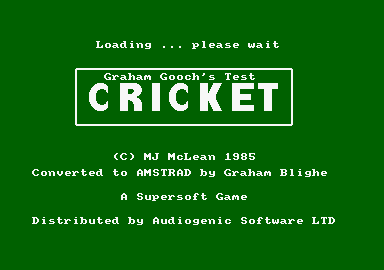 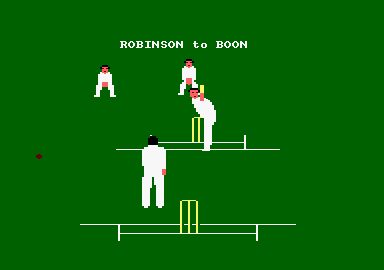 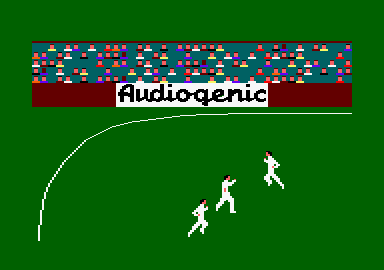
|