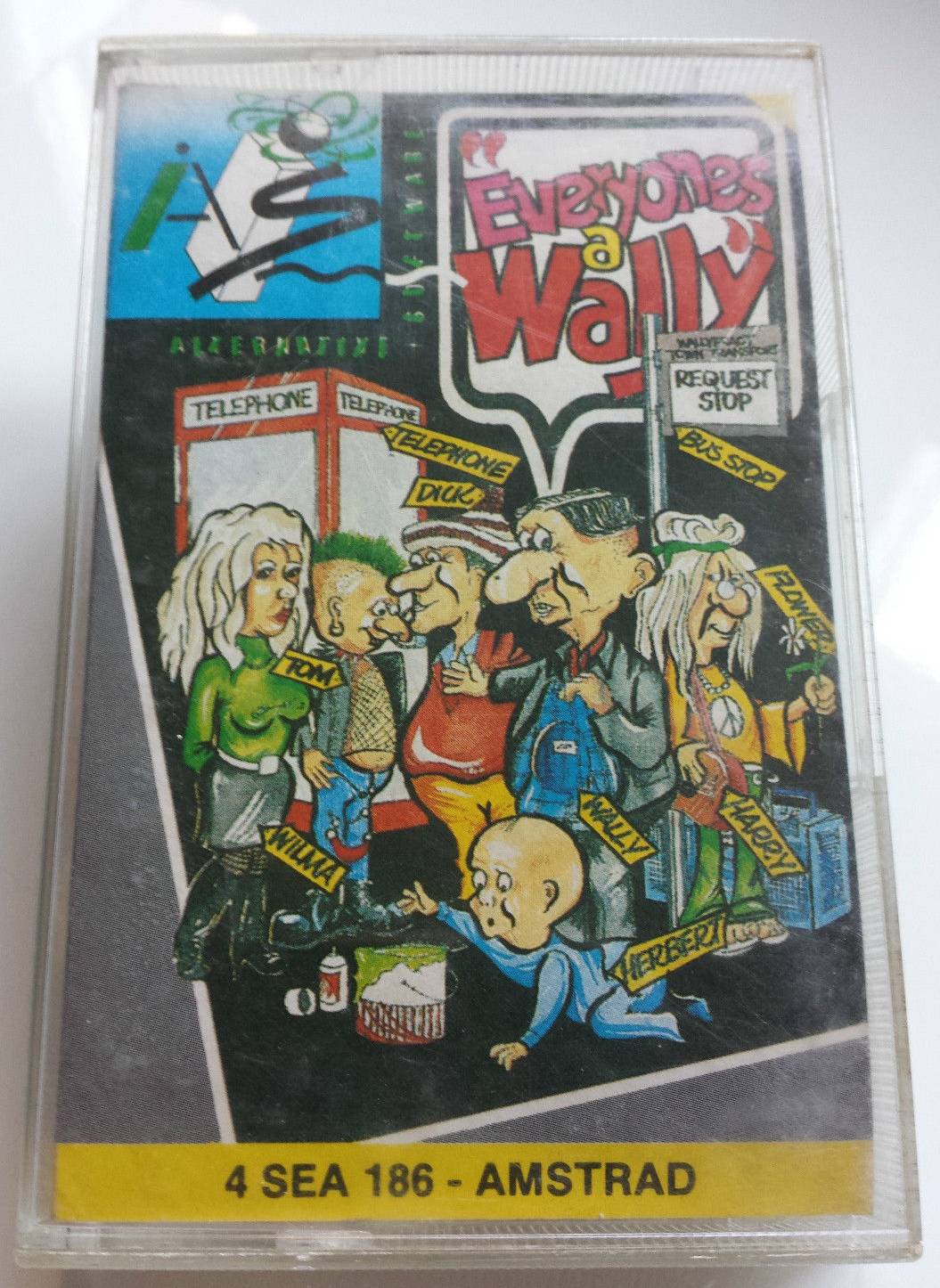
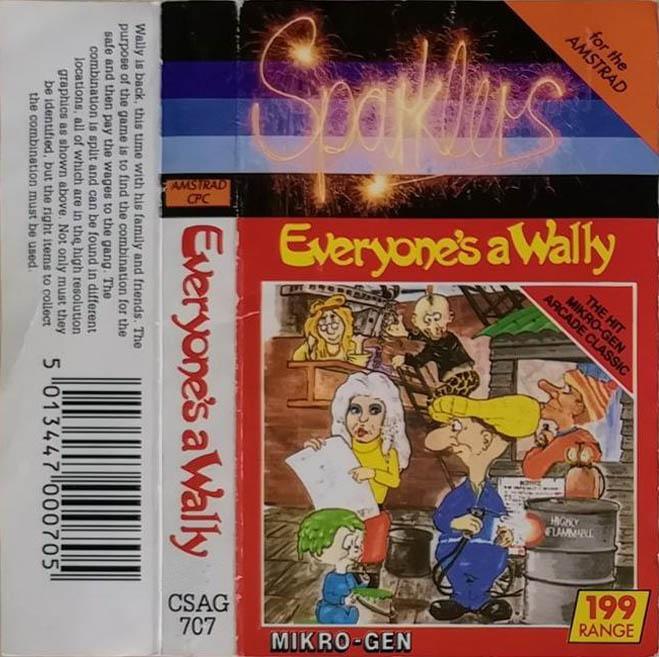
Many conversions are either half-hearted and uninspired, taking no advantage of the different facilities of the new machine. This is different, and it's superb. The Wally song is here in three voices, and on tape too, and whereas the characters and buildings of the town were in monochrome on the Spectrum, here they are all in glorious colour with super smooth movement, and sound effects. It's better than most cartoons on TV and even, dare I write it, better than Sorcery. Magical! The game itself has become a classic. You control either Wally, or any of his friends as they trog around the town. Each has different skills, and whilst wandering you will discover different jobs which need doing, like mending the fountain, repairing a pylon, or building a wall. Not only must you find and control the person whose skills you need, but you must also acquire the bits to use too. Then they get paid, and the cash put into the bank. All you need then is the combination to the safe — also spread about the town — and you get the cash. A monster task, complicated by the fact that certain nasties are flying around which sap your energy, particularly in the built-in arcade games, and soon use up your three lives. 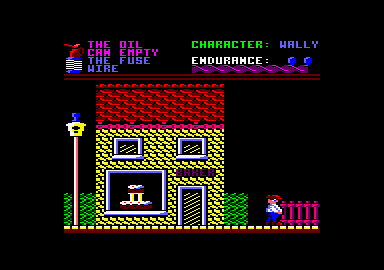 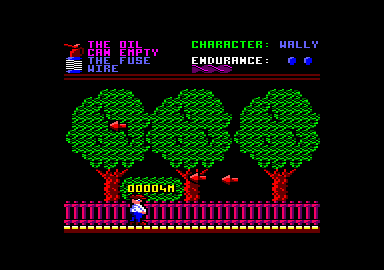
The notes describe this as a complete entertainment package, and for once, I agree. A masterpiece. How about releasing the next one for the Amstrad first, Mikrogen? You can certainly make the machine hum! D.M., HCW |