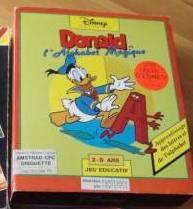
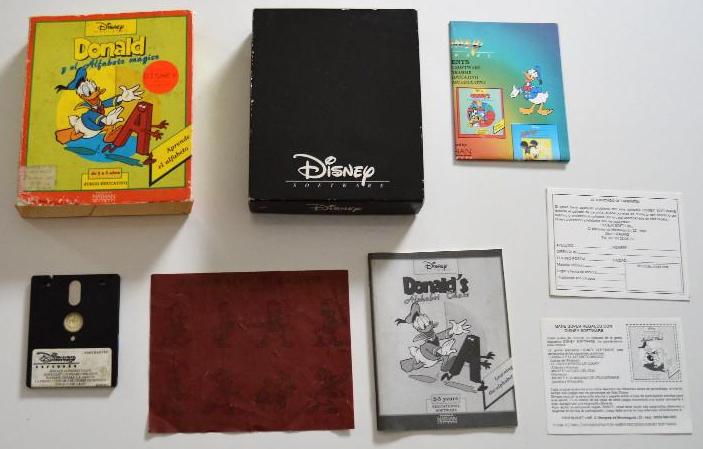
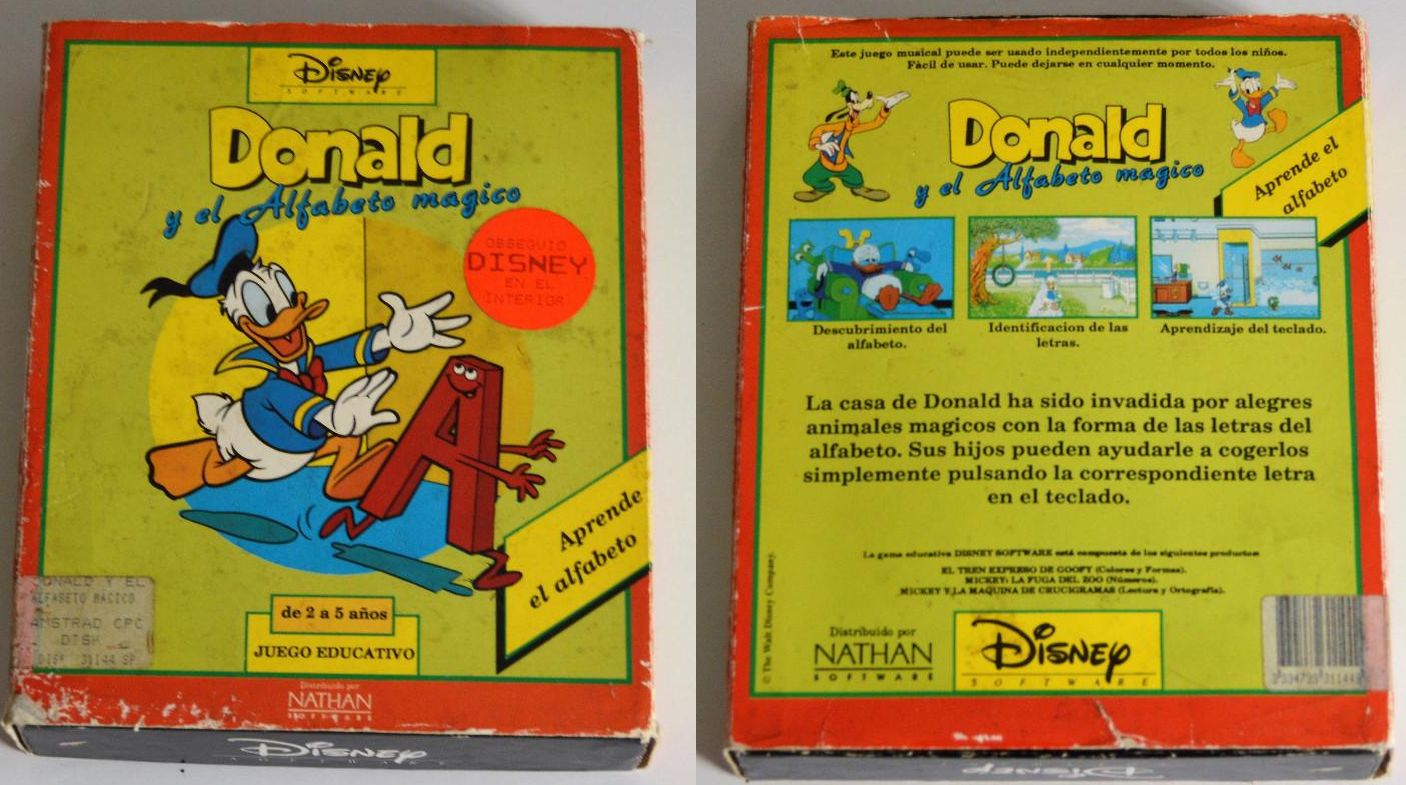
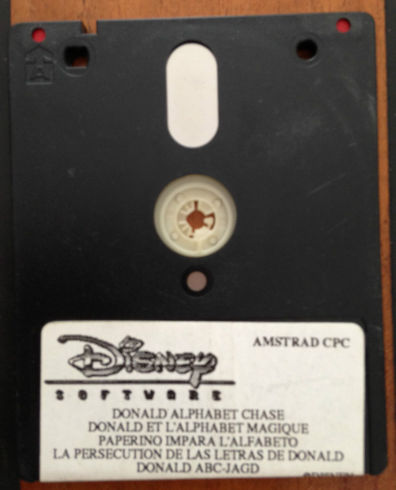
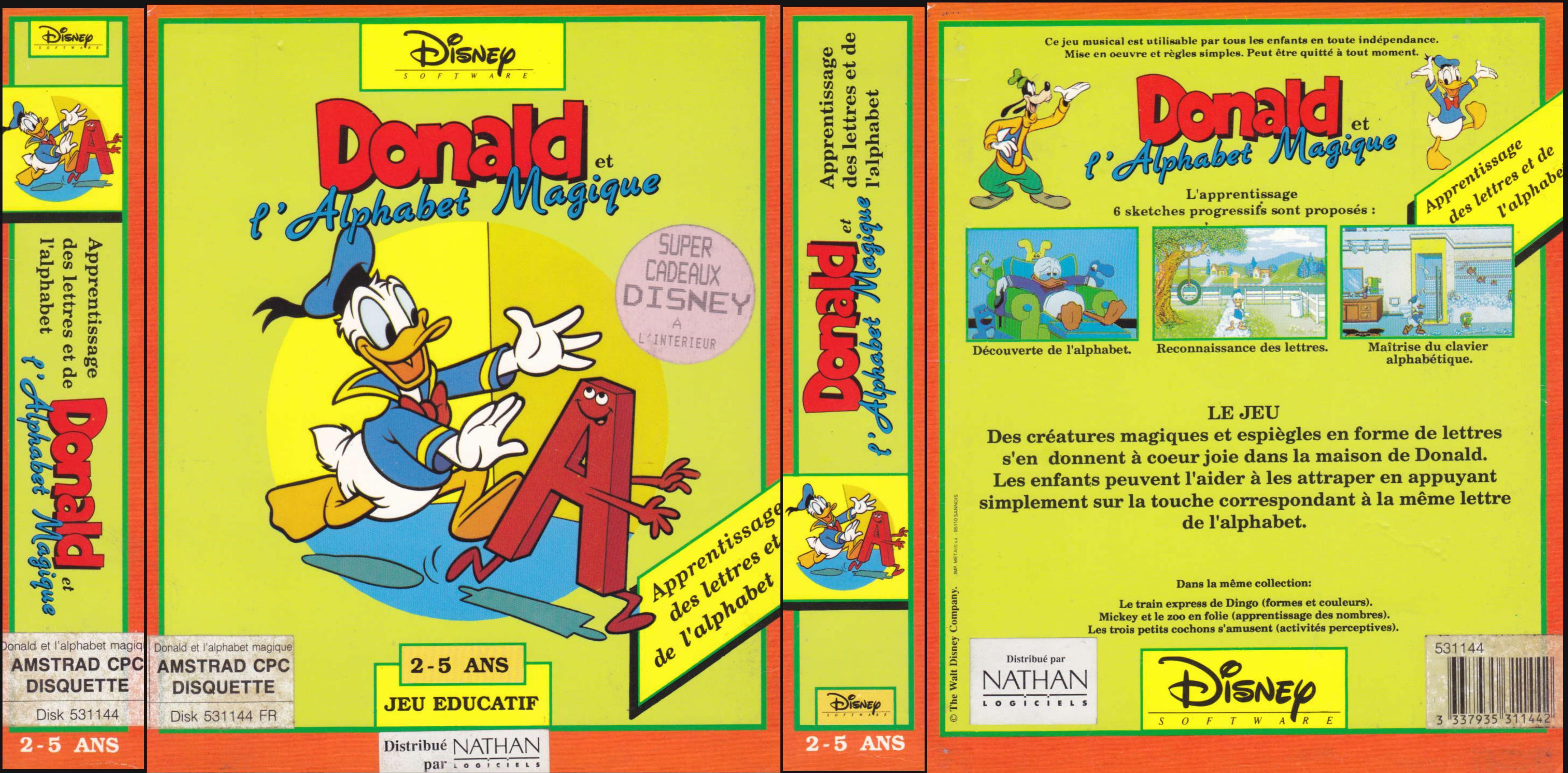
It's as easy as ABC, or is it? Find out ourself as Donald Ok, now before you all run out and buy this Hr game, thinking it's a Disney classic to complement your shell, this one's been designed for the very young, so seasoned gamesters may have to look elsewhere for entertainment. If, however, you have young kiddies at home, or you know of a nipper who's just starting out on the arduous reading trail, then Donald's Alphabet Chase is an excellent educational entertainment package. It's all about letter recognition and learning to use the keyboard and the storyline goes something like this:
Donald comes home to find his house has been invaded by happy magic animals, shaped like the letters of the alphabet
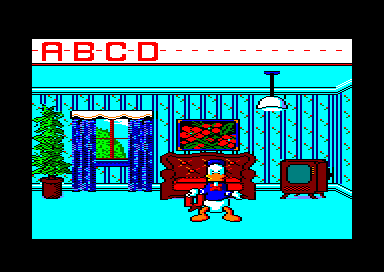
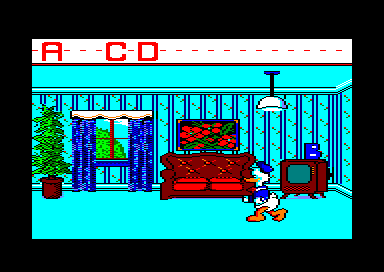
Your part in the game, comes in the form of helping Donald to capture them again. In each room of the house, certain groups of letters can be found skulking in the scenery, for example. A. B, C, and D can be found in the kitchen, some are in the garden, some are in the bath room and so on.
There are two ways you can play the game. While Donald is walking around, pressing any letter on the keyboard will send Donald off in search of that letter and, when he reaches the right room, the letter will be seen floating around for your child to identify. Alternatively, when in a room, each letter will Dash alternately. If your child presses the corresponding letter, Donald will immediately locate that letter, allowing your child to recognise and associate each letter with the keyboard. Capture all of the letters in a room, and your child will be rewarded with a musical segment of the Alphabet
song and. when all of the letters of the alphabet have been collected, you get the whole song as a finale.
The graphics are clear, each letter is instantly recognisable and, above all, for the 2-5 age group. Donald's Alphabet Chase is fun. There is plenty to look at in each of the locations, and the child will enjoy searching around each room, waiting for the letter to show its face.
For learning the alphabet, recognising each letter, and teaching your child the first elements in mastering keyboard controls, Donald's Alphabet Chase will prove to be invaluable. There's no problem about incorrect keypresses, as the program will ignore them, while the game can be interrupted at any time, to allow the more developed user to get back down to serious business, when the interest of the younger elements has waned. All in all. a superb all-round beginning to literacy, and good, clean fun to boot. Well done, Disney Software. Jim Johnson, ACU #9108 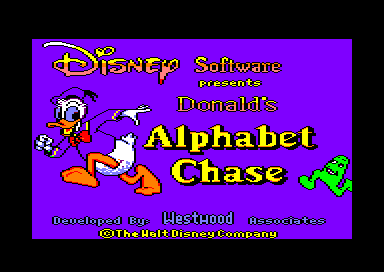
|