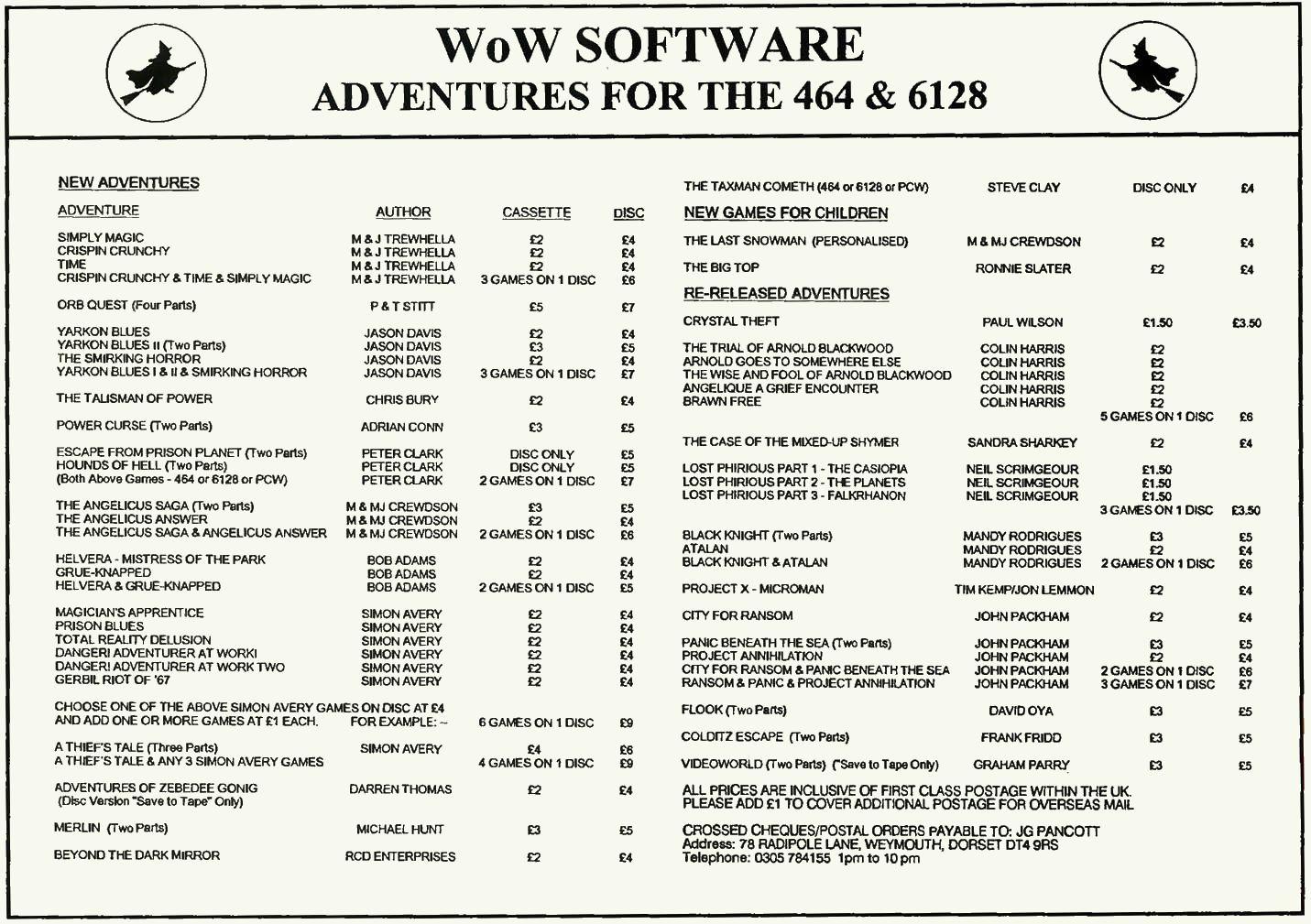
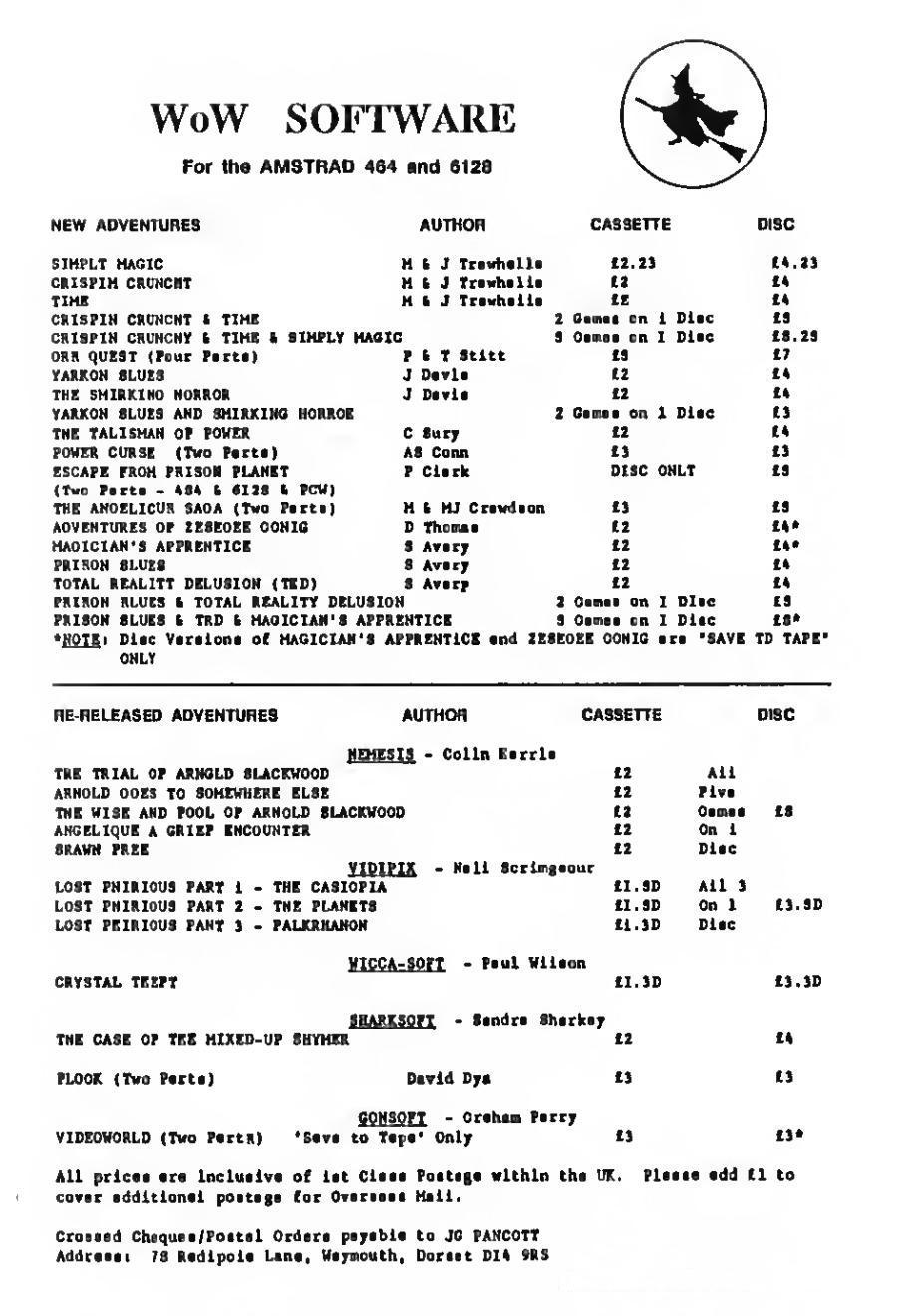
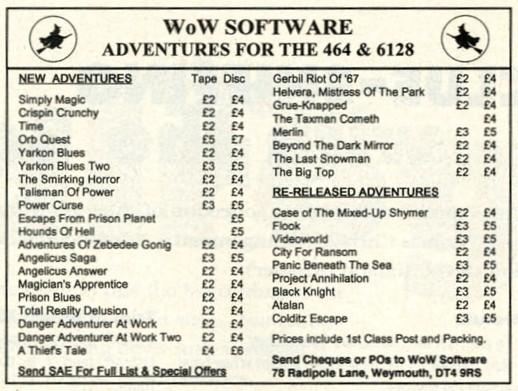
| ★ AMSTRAD CPC ★ GAMESLIST ★ CRYSTAL THEFT (c) WICCA SOFT ★ |
Home Computing Weekly | Amstrad Action |
Four text windows labelled Location, Inventory, Message and Command occupy the screen throughout this traditional text only adventure. Seasoned adventurers may find the lack of graphics to their liking, allowing their imaginations to paint the pictures. Permitting the use of the words ‘and' or ‘then' to chain commands together, the advanced communications system is a considerate and helpful ally. Your task is to locate the communications crystal within the Vegan colony. Directions include up or down , along with movement to the four compass points. Backtracking is not allowed. A move north cannot be followed by a move south. This necessitates a cautious choice of route. No chance to peep round the corner followed by a hasty retreat if danger lurks. A lime limit adds impetus. The time is reflected in total points scored. Save and restore facilities are included, enabling the game to be held at any stage, to be played later. Accompanying the cassette is an adequate instruction booklet and lengthy prologue to this fascinating adventure. D.H., HCW |
|  |
Page créée en 302 millisecondes et consultée 2785 fois L'Amstrad CPC est une machine 8 bits à base d'un Z80 à 4MHz. Le premier de la gamme fut le CPC 464 en 1984, équipé d'un lecteur de cassettes intégré il se plaçait en concurrent du Commodore C64 beaucoup plus compliqué à utiliser et plus cher. Ce fut un réel succès et sorti cette même années le CPC 664 équipé d'un lecteur de disquettes trois pouces intégré. Sa vie fut de courte durée puisqu'en 1985 il fut remplacé par le CPC 6128 qui était plus compact, plus soigné et surtout qui avait 128Ko de RAM au lieu de 64Ko. |