| ★ AMSTRAD CPC ★ GAMESLIST ★ CLASSIC ADVENTURE + MORDON'S QUEST (c) NEW STAR SOFTWARE ★ |
 |
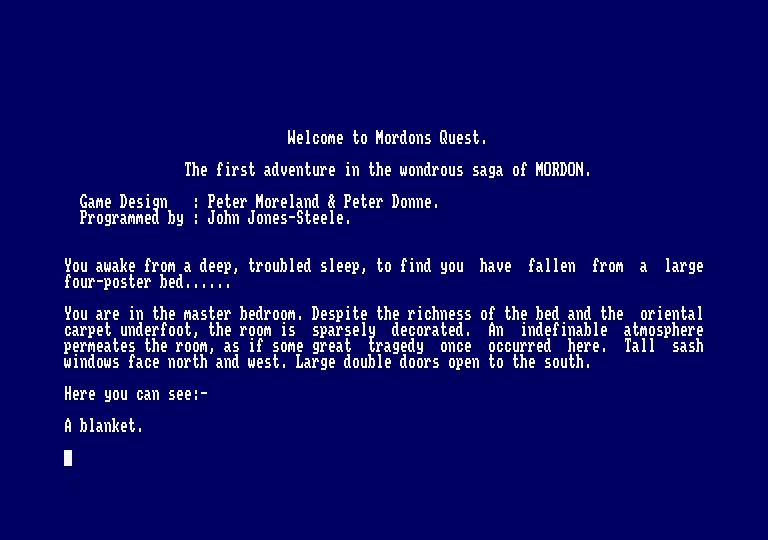
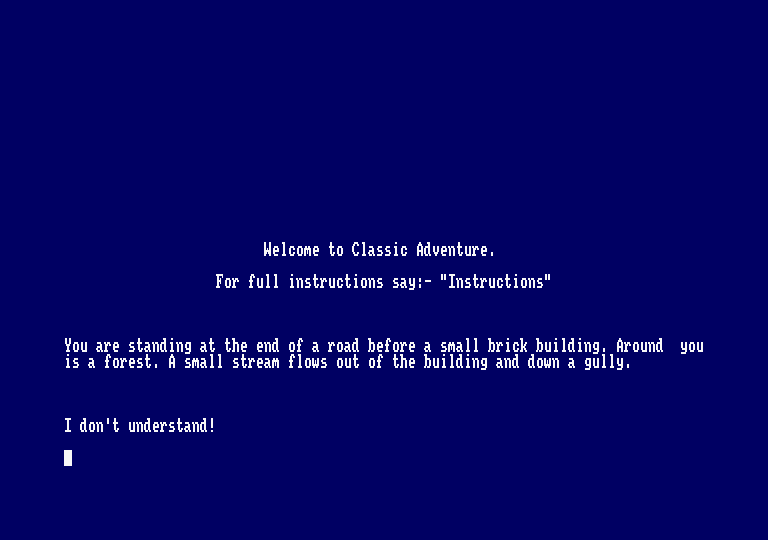
HOW do you follow the gran-daddy of all adventure games? Melbourne House think that they know. Their latest adventure Mordon's Quest, written by John Jones-Steele, has been designated the sequel to Classic Adventure. Classic Adventure was released in January 1984. It was adapted by John Jones-Steele from the original Crowther and Woods game Adventure. In its original form Adventure was designed for a 200K computer and written in Fortran. Different versions of it have since been launched by several software houses. John used to run his own soft- Classic Adventure was originally published under the Abersoft label. By then John was feeling the pressure of running a business and maintaining his link with the University College of Wales where he worked full-time on the main research computer. The original idea for Mordon's Quest was developed by Peter Moreland and Peter Donne, hence the title of the game. They wrote the book form, while John adapted it to fit the Spectrum. Like its predecessor Mordon's Quest is a pure text adventure. It features 156 different locations and a vocabulary of more than 400 words. Mordon is a Lord of reality who must seek out pieces of his machine, which is vital to the structure of our universe. He is the highest amongst the Ancient Order of The Lords of Reality. They are locked in a struggle which, if lost, will cause the destruction of the many realities that co-exist in our universe." PHEW! He must seek out a champion to travel through reality to solve the daunting tasks that will save the fabric of the universe. The introduction to the game explains how you awake from a troubled sleep upon a four poster bed.
|
|  |
|